Futuristic Disco: How 1970s Disco Imagined the Year 2000
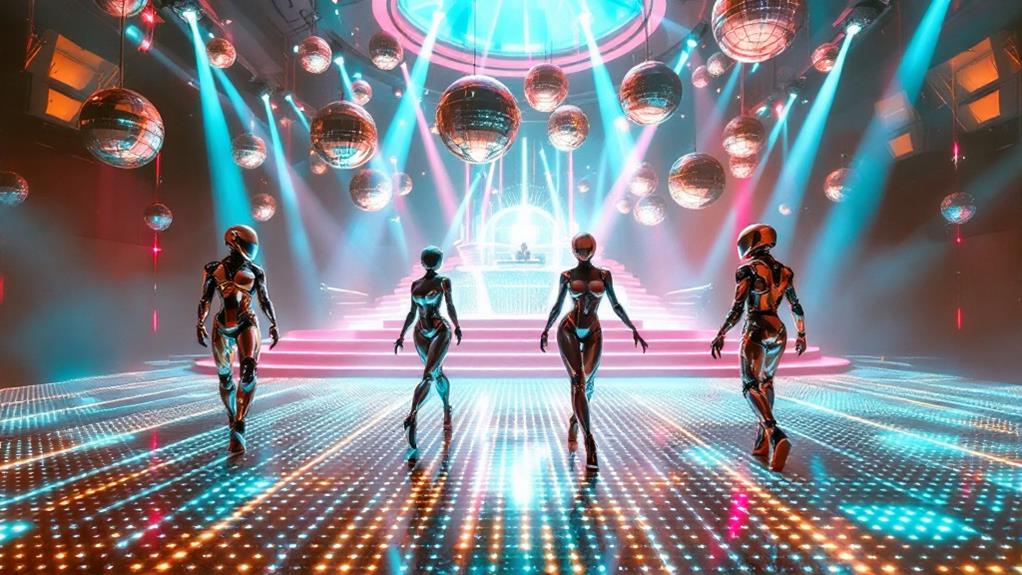
You'd find the 1970s disco scene's vision of the year 2000 both dazzling and optimistic. Visualize sleek cityscapes with glass domes and monorails, filled with dancers in metallic bodysuits and LED-lit accessories. Album artwork portrayed grand space stations and flying cars, while synthesizers created futuristic soundscapes. Disco's influence extended beyond music, shaping fashion trends with space-age designs and inspiring urban planning concepts. The movement even imagined robotic dance partners and interplanetary discos. This fusion of disco energy and futuristic elements left a lasting impact, influencing contemporary representations of tomorrow's world. Exploring disco's legacy reveals surprising connections to modern technology and urban design.
The Disco-Future Aesthetic
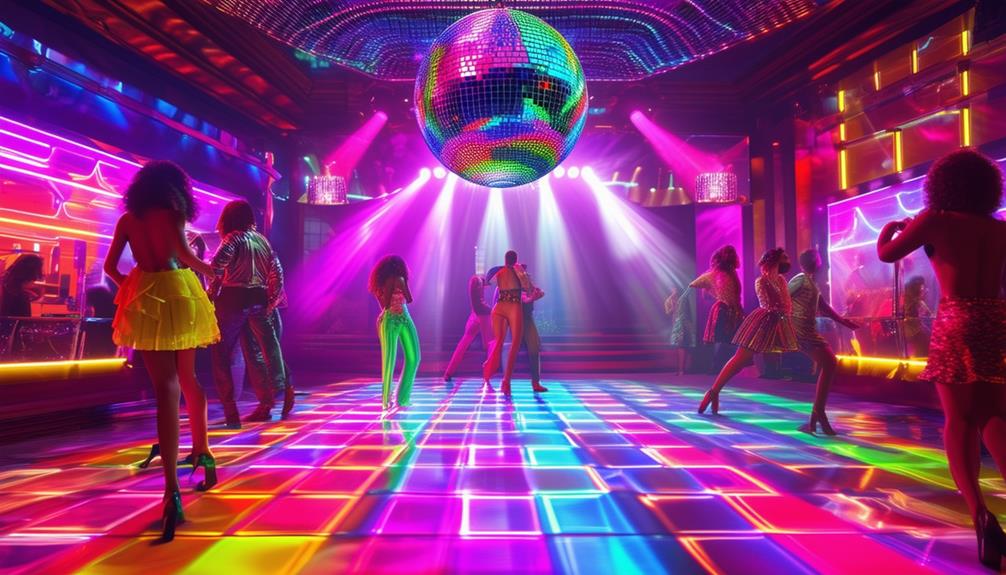
How did the 1970s manage to blend disco's glitter with visions of the future? The disco-future aesthetic seamlessly merged the vibrant energy of disco culture with futuristic elements, creating a unique and captivating style. You'd find yourself surrounded by sleek architecture, advanced transportation concepts, and dazzling colorful lighting that transported you to a cosmic utopia.
Stepping into a disco club, you'd be immersed in cutting-edge designs inspired by space race between US and USSR and circular structures. Transparent materials added to the futuristic ambiance, making you feel as if you were dancing among the stars. The fashion encapsulated the space-age look, with metallic fabrics, bold geometric patterns, and exaggerated silhouettes that screamed interstellar glamour.
Even disco music itself incorporated futuristic themes. As you moved to the beat, you'd hear lyrics about space travel and robots, while the choreography evoked cosmic exploration. This blend of disco and futurism tapped into the era's excitement surrounding the space race and emerging technologies, crafting a vision of a high-tech future where humanity thrived in a dazzling, interstellar setting.
Space-Age Fashion Trends
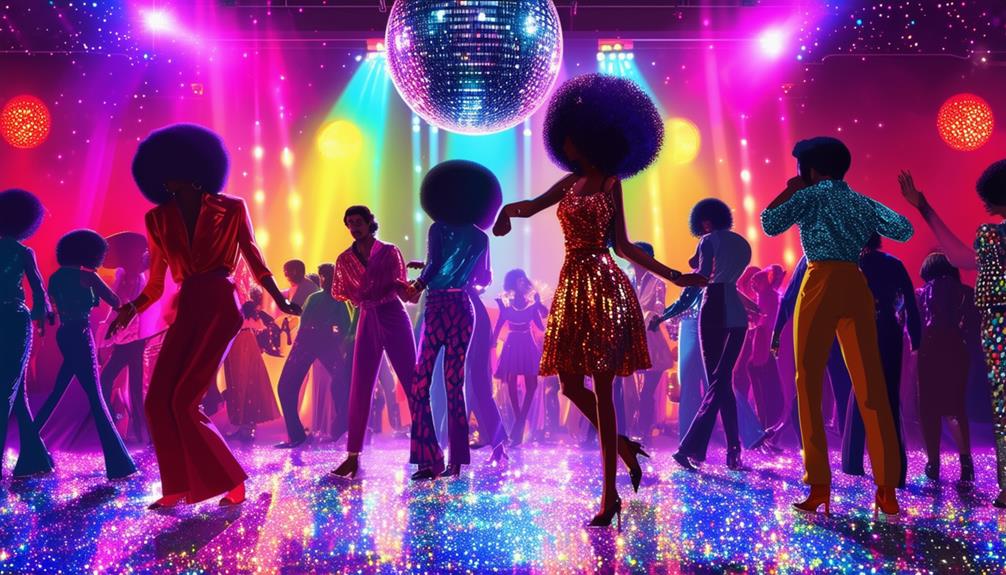
Space-age fashion trends in the disco era were a dazzling fusion of futuristic elements and dance floor glamour. You'd see thousands of people adorned in metallic and iridescent fabrics, shimmering like celestial bodies under the disco lights. Geometric patterns and angular designs reminiscent of advanced technology covered garments, creating a visual language that spoke of tomorrow's world.
As you entered a disco, you'd witness people sporting: Futuristic License Plate Frames, gloves, headpieces, and boots with LED lights, bodysuits and catsuits mimicking astronaut gear, oversized collars and shoulders inspired by space suits, and shiny silver, gold, and holographic materials. These space-age fashion trends weren't just about looking good; they were a statement. People would dress as if they were stepping out of a time machine from the future. The streamlined silhouettes of bodysuits and catsuits evoked the sleek design of spaceship interiors, while illuminated accessories metamorphosed dancers into living constellations. Exaggerated collars and shoulders created a striking silhouette that commanded attention on the dance floor, just as a space traveler might command respect in a far-off galaxy.
Futuristic Disco Album Artwork
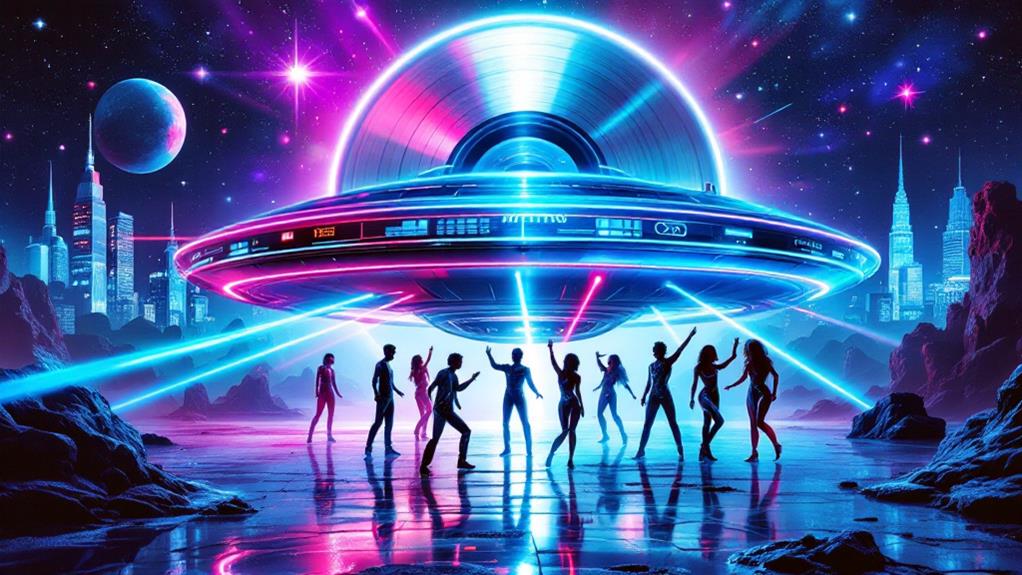
While disco music pulsed through the airwaves, album artwork transported listeners to fantastical futures. As you flipped through record bins, you'd encounter vivid illustrations of advanced space stations and cosmic cityscapes that seemed to leap off the covers. Artists like Roger Dean and Shusei Nagaoka brought to life rotating space habitats, including O'Neil Cylinders and Bernal Spheres, offering glimpses of humanity's potential off-world homes.
These futuristic disco album covers didn't just focus on space. They showcased sleek, high-tech transportation modes that could've been straight out of a sci-fi film. Hovercrafts, flying cars, and automated urban transit systems zipped through neon-lit landscapes, hinting at a world where traffic jams were a thing of the past.
The artwork also imagined grandiose, domed arenas and multi-tiered, glass-enclosed cityscapes with advanced architectural designs. These structures seemed to house holographic dance floors where disco never died. By blending retro-futuristic aesthetics with lively, pulsing neon colors, these album covers evoked a sense of the space age that was both exciting and optimistic.
Synthesizers and Electronic Soundscapes
Futuristic disco wasn't just about eye-catching album covers; it revolutionized the sonic domain of popular music. As you listen to disco tracks from the '70s, you'll hear the unmistakable influence of synthesizers like the Moog and Buchla. These electronic instruments allowed producers to craft otherworldly soundscapes that transported listeners to a technologically advanced future.
Imagine yourself in a disco club, surrounded by these futuristic sounds:
- Computer-generated melodies swirling around you
- Hypnotic, repetitive rhythms pulsing through your body
- Vocoder-processed vocals creating an alien atmosphere
- Modular synth progressions building tension and release
Disco producers embraced cutting-edge technology, incorporating drum machines, sequencers, and experimental sound processing techniques. These cyberpunk production techniques resulted in a distinctive, space-age sonic aesthetic that evoked visions of the year 2000 and beyond.
Giorgio Moroder's "I Feel Love" exemplifies this futuristic approach, pioneering the use of repetitive electronic rhythms and textures. As you immerse yourself in these disco anthems, you'll experience how the genre's innovative use of synthesizers and electronic soundscapes painted an auditory image of a high-tech future.
Disco's Visions of Urban Utopias
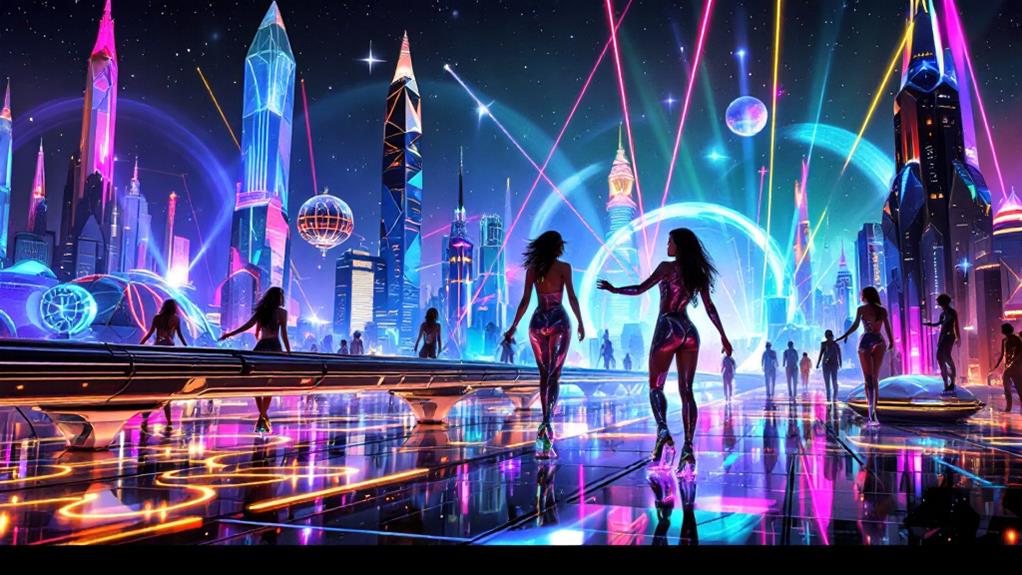
Through album covers, music videos, and live performances, disco artists painted lively visions of urban utopias. You'd see futuristic cityscapes with sleek skyscrapers sporting exterior lifts and automated skybridges connecting them. These urban landscapes featured elevated transportation hubs where various modes of transit seamlessly converged, including monorails and automated shuttles.
Imagine stepping into a circular shopping mall with a central elevator hub, surrounded by multilayered shopping plazas. You'd gaze up at the glass dome arena, envisioning future sports played in these grand structures. The disco aesthetic didn't stop at Earth's surface; it extended into space with depictions of O'Neil Cylinders, Bernal Spheres, and Stanford Torus stations.
While some of these visions have materialized in modern cities like Dubai, Chongqing, and Hong Kong, the full scale of disco's urban utopias remains unrealized. The technological capabilities imagined by disco artists still surpass our current achievements. Yet, these futuristic visions continue to inspire urban planners and builders, pushing the boundaries of what's possible in city design and transportation systems.
Interplanetary Dance Floors
As disco artists painted their visions of urban utopias, they didn't limit their imagination to Earth's surface. They envisioned a future where you could dance among the stars, quite literally. In the 1970s, artists dreamed up interplanetary dance floors on orbiting space stations, where you'd experience cosmic dance parties in low-gravity environments.
These futuristic concepts weren't just flights of fancy. They were based on serious proposals for space habitats, like the O'Neill Cylinder, Bernal Sphere, and Stanford Torus. These massive structures were designed to support human life in space, complete with recreational facilities including dance floors. Imagine an interplanetary dance culture where you could:
- Float gracefully through zero gravity dance moves
- Groove under a transparent dome with Earth as your backdrop
- Experience simulated gravity on a rotating dance floor
- Party in lush, indoor environments within a space station
These cosmic disco visions combined the era's love for dance with innovative space habitat designs. They showcased a future where humanity's passion for music and movement would extend beyond Earth's atmosphere, creating truly out-of-this-world dance experiences.
Robotic Dance Partners
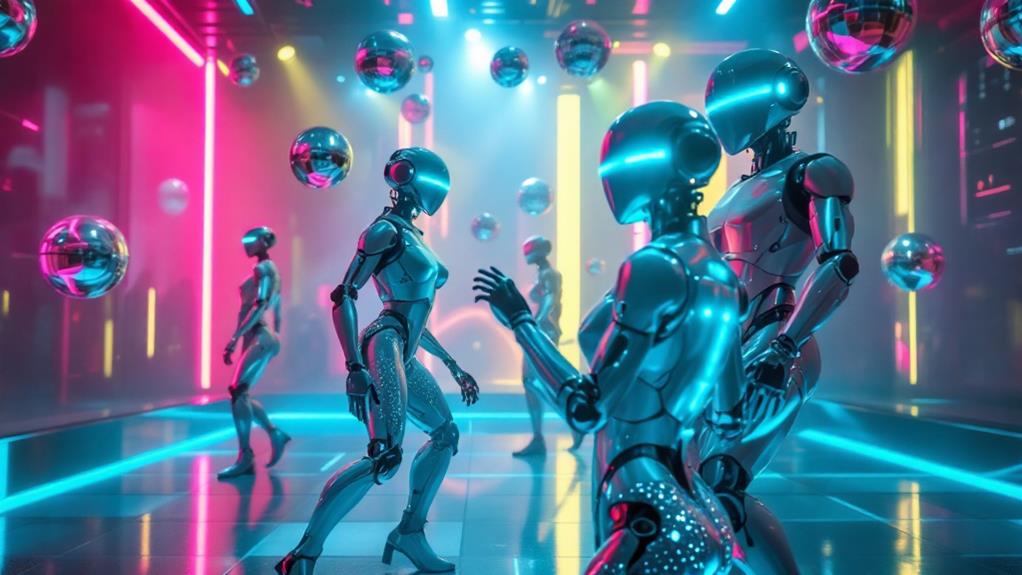
Disco visionaries frequently imagined a future where you'd never lack a dance partner, thanks to robotic companions on the dance floor. In the 1970s, concept art and illustrations portrayed sleek, humanoid robots designed to be your futuristic dance companions in disco clubs. These robotic dance partners were seen as a technological advancement that would revolutionize your disco experience by the year 2000.
You'd find these robots mimicking human dance moves and styles with perfect precision, as if they'd commanded motion capture techniques before they even existed. Disco-themed films and TV shows often showcased scenes with robotic dancers performing synchronized routines alongside human dancers, hinting at a future where robotic choreography would be commonplace.
While we haven't fully realized the dream of robotic dance partners, today's advancements in robotics and AI are gradually enabling more sophisticated dance-like movements in modern robots. You might one day encounter robots with intelligent feedback systems that can adjust their moves to match your rhythm and style, bringing us closer to the disco dreams of the 1970s.
Disco's Legacy in Futurism
Beyond the dance floor, disco's influence on futurism extended far beyond robotic partners. Disco's transformative power shaped visions of the future in ways you might not expect. The genre's optimism and technological utopianism left an indelible mark on science fiction, cyberpunk, and urban design.
When you think of disco's legacy in futurism, imagine:
- Sleek, metallic costumes inspiring space-age fashion
- Circular dance floors influencing space station designs
- Immersive lighting systems echoing in future cityscapes
- Communal energy of discos reflected in utopian societies
Disco's impact on futuristic visions wasn't just about aesthetics. The role of marginalized groups in shaping disco culture contributed to more inclusive depictions of future societies. You'll find echoes of disco's egalitarian spirit in sci-fi narratives that challenge traditional power structures.
The genre's adoption of advanced technology and space exploration themes continues to resonate in contemporary futurism. From virtual reality experiences to smart city designs, you can trace the DNA of disco's futuristic dreams. As you look around today's urban landscapes and digital domains, you're witnessing the enduring legacy of disco's bold vision for tomorrow.