The Influence of Japanese Minimalism on Western Home Decor
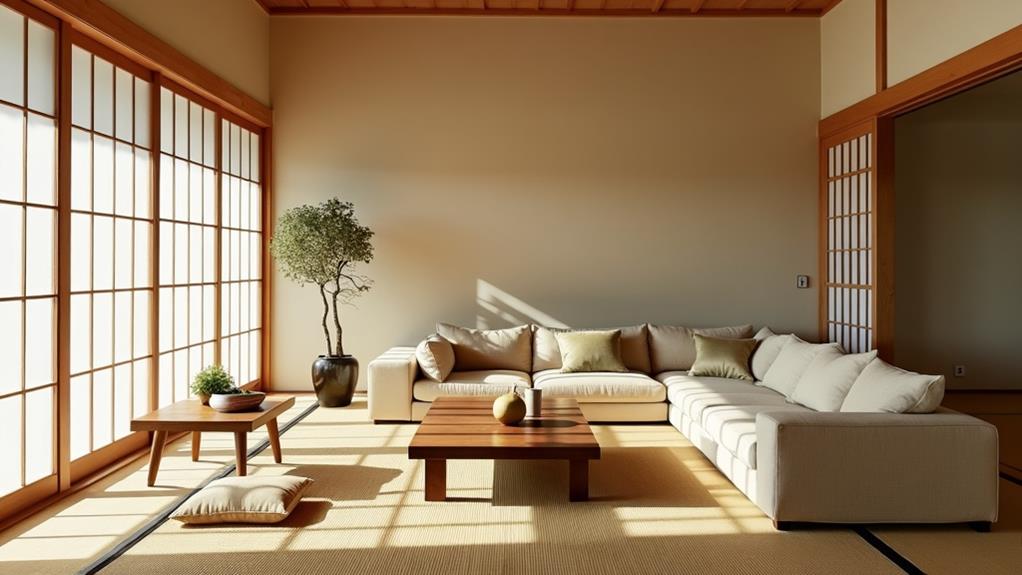
Japanese minimalism is increasingly influencing Western home decor, emphasizing simplicity and a profound connection to nature. Rooted in Zen philosophy, it celebrates the beauty of imperfection and the significance of negative space. Western designers are now adopting natural materials, neutral color palettes, and functional furnishings to create spaces that foster mindfulness and well-being. This cultural shift is compelling because minimalist aesthetics offer a counterbalance to the often chaotic modern lifestyle, promoting tranquility and intentional living.
Philosophical Foundations
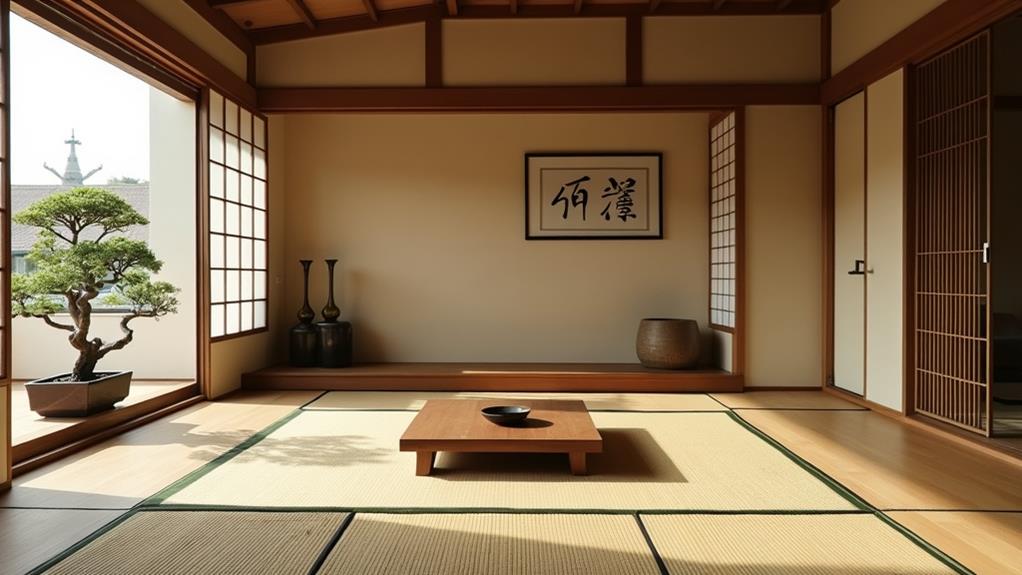
Japanese minimalism, deeply rooted in Zen philosophy, offers a profound approach to home decor that emphasizes simplicity and tranquility. At its core, Japanese minimalism revolves around the philosophical foundations of wabi-sabi and ma. Wabi-sabi values beauty in imperfection and transience, while ma highlights the importance of negative space in design. Together, they create environments that feel serene and balanced.
Embracing simplicity and functionality, the principle of seijaku encourages meditative design. By fostering a sense of calm and reflection through simplicity and order, you can transform your home into a sanctuary. Traditional Japanese architecture exemplifies these values with open spaces that invite natural light, creating a harmonious relationship between interior and exterior environments.
Focusing on fundamental elements such as light, space, form, and natural materials, Japanese minimalism reflects a deep appreciation for authenticity and a connection to nature. This connection improves well-being and quality of life. Incorporating these elements into your home invites tranquility and authenticity into your daily life.
The philosophical foundations of Japanese minimalism have greatly influenced Western interior design. By adopting these principles, you can create a living space that enhances your sense of peace and well-being.
Evolution of Minimalism
Minimalist design has evolved from a 1960s artistic movement into a comprehensive lifestyle choice. By embracing simplicity, functional design, and nature-inspired aesthetics, modern Western homes now reflect the core principles of Japanese minimalism. This shift promotes mental well-being by creating intentional, clutter-free living spaces.
Transition to Simplicity
The shift towards simplicity in Western home decor emerged as a deliberate reaction against the ornate and cluttered styles of the Victorian era. Embracing Japanese minimalism, the focus turned to clean lines and natural materials, providing a stark contrast to the heavy, intricate designs of the past. Rooted in Zen philosophy, this minimalist approach emphasizes simplicity and the importance of negative space, known as Ma, fostering tranquil and uncluttered environments.
Prominent designers like Frank Lloyd Wright and Charles Eames championed these principles, incorporating Japanese aesthetics into their architecture and furniture designs. Their work featured open spaces, functional forms, and a strong connection to the natural world. This mid-20th-century shift laid the foundation for the minimalist trend that is prevalent today.
More recently, the KonMari method has further propelled the minimalist movement, advocating for decluttering and retaining only items that spark joy. Consequently, contemporary Western interiors increasingly reflect Japanese minimalism, with a preference for natural materials like wood and stone, neutral color palettes, and a seamless indoor-outdoor connection. This approach fosters a serene and balanced atmosphere in the home.
Functional Design Principles
Japanese minimalism, with its focus on functionality, has significantly influenced Western home decor. By prioritizing essential elements and eliminating excess, it has introduced Western designers to principles that transform living spaces. Multi-purpose furniture, such as low platform beds and collapsible tables, makes rooms more adaptable and efficient, echoing traditional Japanese homes.
Incorporating natural materials like wood and bamboo not only aligns with Japanese minimalism but also enhances the aesthetic appeal and practicality of Western interiors. These materials bring warmth and simplicity, making homes feel inviting and functional.
The concept of 'Ma,' which values negative space, encourages open layouts that promote tranquility and spatial awareness. This principle helps avoid clutter, creating a serene and organized living space.
The rise of the KonMari method, popularized by Marie Kondo, has also led to a cultural shift towards decluttering and functional living. By focusing on what truly sparks joy, individuals can create home environments that reflect the core principles of Japanese minimalism, improving both functionality and emotional well-being.
Nature-Inspired Aesthetics
Japanese minimalism, rooted in functional design, extends its influence through nature-inspired aesthetics. Emphasizing a deep connection to the natural world, it incorporates materials like wood, bamboo, and stone. These organic elements have inspired Western home decor trends, making spaces feel more grounded and serene.
A key aspect of Japanese aesthetics is the use of neutral color palettes, mimicking the soft, earthy tones found in nature. Western interiors have adopted similar hues to promote tranquility and harmony in living spaces. These neutral colors create a soothing backdrop that complements the natural materials used in decor.
The principle of Shakkei, or borrowed scenery, encourages integrating outdoor views into interior spaces. This concept has led to the incorporation of large windows and open layouts in Western homes, inviting the beauty of nature indoors. Additionally, Japanese aesthetics celebrate wabi-sabi, the beauty of imperfection. This has influenced Western decor to appreciate natural flaws and weathered materials, adding character and authenticity to homes.
Incorporating plants and greenery, a hallmark of Japanese design, has also become popular in Western interiors. This not only enhances well-being but fosters a calming environment, connecting people more deeply to the natural world.
Key Design Elements
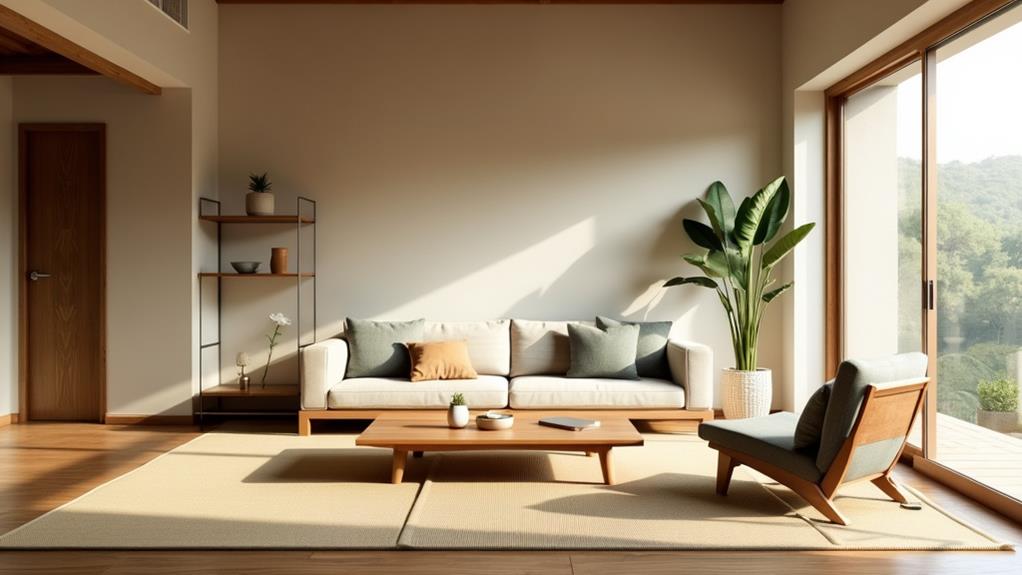
Japanese minimalism is characterized by the use of natural materials such as wood, bamboo, and rice paper, which add texture and warmth to Western home decor. These elements create a serene and inviting atmosphere, seamlessly blending modern aesthetics with traditional charm. Incorporating Japanese minimalism into your home emphasizes neutral color palettes, often using soft tones inspired by nature, fostering a calming environment perfect for relaxation.
Functional furniture is another cornerstone of Japanese minimalism. Each piece often serves multiple purposes, allowing you to optimize space without compromising on style. Imagine a sleek, low-profile coffee table that doubles as storage or a futon that can shift from seating to sleeping with ease.
Key design elements include:
- Functional Furniture: Opt for pieces that serve dual purposes, enhancing both practicality and aesthetics.
- Neutral Color Palettes: Use soft, nature-inspired tones to create a peaceful and inviting atmosphere.
- Sliding Doors and Shoji Screens: These elements provide flexible space division, improving light flow and air circulation.
- Concept of 'Ma' (Negative Space): Thoughtfully arrange furnishings to foster tranquility and visual clarity in your home.
Natural Materials
Embracing natural materials is central to Japanese minimalism and can transform your Western home into a serene retreat. By incorporating elements like wood, bamboo, and rice paper, you improve your home's aesthetic quality and create a harmonious connection to nature. Japanese interiors often emphasize these materials to foster a calming environment, aligning with Zen principles that promote tranquility and mindfulness.
Tatami mats are a fantastic enhancement to your home. Traditionally made from rice straw, they offer versatility and a natural texture that provides an authentic Japanese touch. Their simple yet functional design can easily blend into your living space, adding both comfort and elegance.
Shoji screens are another excellent example. Crafted from wood and rice paper, these screens allow you to divide spaces flexibly while promoting natural light and a serene ambiance. They're not just functional; they also improve the visual appeal by adding a touch of Japanese minimalism to your decor.
Moreover, the preference for sustainable, natural materials in Japanese design aligns well with modern Western trends. This commitment to eco-friendliness and responsible sourcing not only beautifies your space but also connects with a more sustainable lifestyle.
Neutral Color Palettes
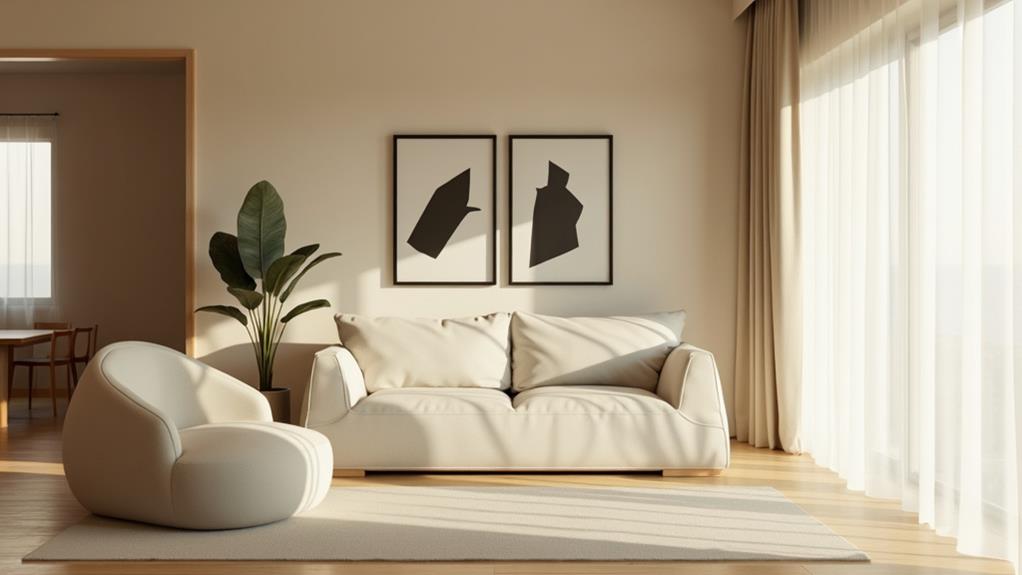
Incorporating neutral color palettes into your home decor is key to achieving the serene simplicity of Japanese minimalism. By limiting your palette to five or fewer colors, you can create a peaceful and harmonious environment. Neutral tones, such as shades of beige, gray, and soft whites inspired by nature, foster a calming atmosphere and serve as a gentle backdrop for occasional lively accents.
Japanese minimalism emphasizes tranquility and reflection, aligning well with Zen philosophy. To bring this aesthetic into your home, consider these four key elements:
- Walls: Use soft, muted colors like off-white or light gray to make your space feel open and airy.
- Furniture: Choose pieces crafted from natural materials in neutral hues, such as wooden tables and linen sofas.
- Textiles: Incorporate beige or taupe curtains, rugs, and cushions to add texture without overwhelming the senses.
- Accents: Add small pops of color through art or decor items to provide subtle contrast and interest.
Space and Light
When incorporating Japanese minimalism into a Western home, focus on open floor plans that utilize natural light. Apply the concept of "Ma" to thoughtfully arrange furniture and decor, creating visual pauses and a sense of spaciousness. Sliding doors and shoji screens can help maintain flexible room divisions while enhancing light flow.
Open Floor Plans
Open floor plans, inspired by Japanese design principles, aim to create a sense of spaciousness and fluidity that enhances the ambiance of Western homes. By removing unnecessary walls, natural light can permeate the living space, fostering a brighter and more open environment. This approach not only improves spatial awareness but also aligns with the Japanese principle of Ma, which values both occupied spaces and the voids that accentuate them.
To visualize the impact of these open floor plans, consider the following elements:
- Large windows: These flood your home with natural light, creating a seamless connection with the outdoors.
- Sliding doors: Inspired by traditional Japanese architecture, they provide flexibility and smooth transitions between rooms.
- Minimalist furnishings: These keep the space uncluttered, highlighting the room's openness and tranquility.
- Multi-purpose areas: Similar to Japanese living spaces, these adapt to different functions, maximizing utility and simplicity.
Natural Light Integration
Embrace natural light to create a serene, open atmosphere akin to Japanese homes. Japanese-inspired decor emphasizes natural light to enhance interior ambiance. Large windows and sliding doors, typical of Japanese architecture, let sunlight flood your rooms, seamlessly connecting indoor and outdoor spaces.
Shoji screens are perfect for balancing privacy and illumination. These traditional Japanese elements diffuse light, creating a soft, serene atmosphere while maintaining privacy. This aligns with the Zen principle of tranquility, fostering a calming environment that reduces stress and promotes well-being.
To further brighten your living spaces, strategically place mirrors and choose light-colored walls. These elements, inspired by Japanese minimalism, increase the reflection and diffusion of natural light. Thoughtfully integrating these aspects creates a serene atmosphere that enhances your quality of life, making your home a sanctuary of peace and harmony.
Negative Space Utilization
Building on the importance of natural light in creating a serene atmosphere, the concept of Ma, or negative space, is pivotal in Japanese minimalism. Negative space, a cornerstone of Japanese design principles, highlights empty areas in a room to foster tranquility and openness. By incorporating negative space into your home decor, you create an environment that feels both spacious and calming.
To effectively utilize negative space, consider these key practices:
- Unobstructed Areas: Keep large areas free of furniture or decor to allow natural light to flow and enhance spatial awareness.
- Strategic Furniture Placement: Place furniture thoughtfully to create visual pauses, inviting contemplation and balance within the room.
- Decluttering: Remove unnecessary items to optimize negative space, ensuring a serene environment free from distractions.
- Light and Voids: Use natural light to highlight the beauty of empty spaces, improving the connection between your interior and the outdoors.
Japanese-Inspired Furniture
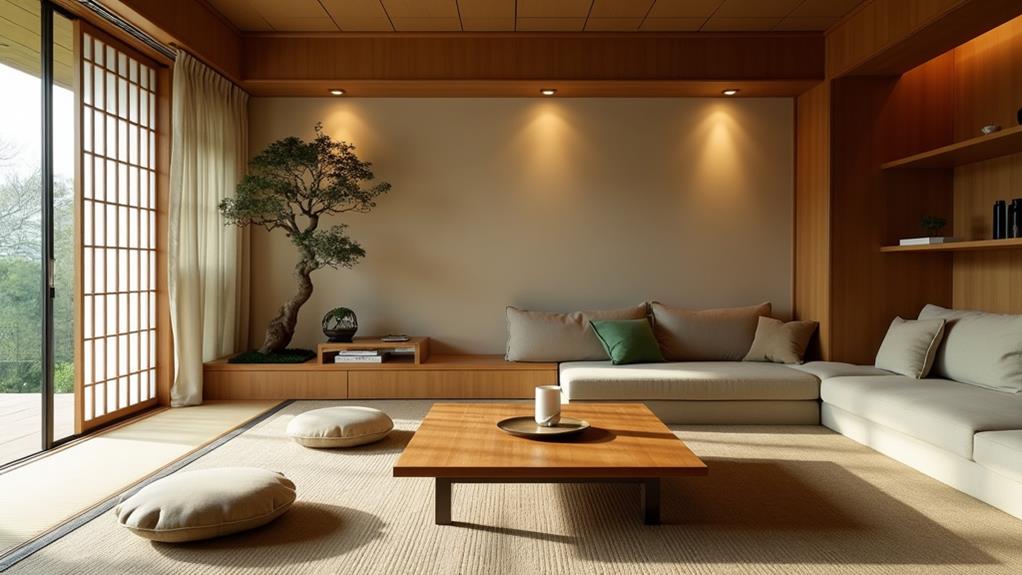
Incorporating Japanese-inspired furniture into your home embraces a design philosophy that values simplicity, functionality, and a deep connection to nature. Japanese design features clean lines and multifunctional pieces, reflecting a minimalist aesthetic that many Western homes find both refreshing and practical. Using materials such as natural wood, bamboo, and rice paper, these pieces enhance the tranquility of your environment and bring a touch of nature indoors.
Low-profile furniture, like platform beds and low seating, promotes a sense of openness and fluidity in your interior layout, helping to create a serene and uncluttered space essential for a minimalist approach. Sliding doors, or shoji screens, are another hallmark of Japanese-inspired furniture. They offer flexible space division, optimize natural light, and maintain privacy.
Incorporating traditional items such as kotatsu tables adds a unique blend of functionality and cultural richness to your home. These tables provide warmth and comfort, epitomizing the practical yet simple beauty of Japanese design. By integrating these elements, you create a harmonious, balanced living space that embodies both efficiency and elegance.
Zen Gardens and Bonsai
Incorporating Zen gardens and bonsai into your home can create tranquil spaces that enhance mindfulness. These elements of Japanese minimalism require artistic plant maintenance, fostering patience and precision. By integrating these features, you bring natural beauty and a serene atmosphere into your living spaces.
Create Tranquil Spaces
In the fast-paced environment of Western life, creating tranquil spaces with Zen gardens and bonsai offers a sanctuary of calm. By embracing Japanese Zen principles, you can transform your home into a peaceful retreat. Zen gardens, or karesansui, utilize gravel, rocks, and carefully arranged elements to craft serene landscapes that promote meditation and mindfulness. Imagine dedicating a small corner of your home to:
- Raked gravel patterns – Representing water and conveying a sense of flowing tranquility.
- Strategically placed rocks – Symbolizing mountains or islands, bringing balance and stability.
- Miniature bonsai trees – Embodying harmony with nature and requiring careful attention, thereby promoting mindfulness.
- Neutral color palettes – Using natural materials like wood and stone to enhance the room's peaceful ambiance.
Incorporating bonsai trees into your interior spaces not only symbolizes a connection to nature but also encourages tranquility. These miniature trees, with their precise maintenance, reflect the Japanese aesthetic of wabi-sabi, which celebrates imperfections and the beauty of the natural world. By integrating Zen gardens and bonsai, you foster a serene environment that promotes relaxation and reduces stress, aligning perfectly with modern wellness-focused living spaces.
Artistic Plant Maintenance
Maintaining Zen gardens and bonsai trees isn't merely a gardening task; it's an art form that infuses mindfulness and tranquility into your living space. Zen gardens, or "karesansui," utilize gravel, rocks, and carefully placed plants to create minimalist landscapes that foster meditation and serenity in Western home decor. By raking the gravel into patterns and thoughtfully positioning rocks, you engage in artistic plant maintenance that embodies Japanese design principles.
Bonsai cultivation involves nurturing miniature trees in containers, emphasizing patience, precision, and the beauty of nature. This practice mirrors the minimalist aesthetic of Japanese design and enhances spatial awareness in your home. Each bonsai becomes a focal point, aligned with the concept of "Ma," or negative space, creating areas for contemplation and calm.
Both Zen gardens and bonsai require mindfulness and intentionality. Maintaining these artistic plant forms fosters a deeper connection to nature, enhancing the ambiance of your living space. By incorporating these elements, you're not merely decorating; you're embracing a lifestyle that values simplicity, tranquility, and a profound appreciation for the natural world.
Enhance Mindfulness Practice
Incorporating Zen gardens and bonsai trees into your home decor goes beyond aesthetics; it enhances your mindfulness practice. Zen gardens, or karesansui, use gravel, rocks, and minimal plants to create tranquil, contemplative spaces. These serene elements promote relaxation and reflection, aligning with Japanese design principles of simplicity and natural beauty.
Bonsai trees, often regarded as living art, symbolize harmony and balance. Caring for these miniature trees requires patience and mindfulness, fostering a deeper connection to nature and personal growth. Tending to bonsai trees keeps you present in the moment, enriching your mindfulness experience.
Visualize this mindful decor with:
- Zen Garden: A small tray with carefully raked gravel and strategically placed rocks, serving as a peaceful focal point.
- Bonsai Tree: A miniature tree displayed on a wooden stand, representing balance and harmony.
- Meditation Space: A quiet corner featuring a Zen garden and bonsai, dedicated to daily mindfulness practices.
- Natural Light: Ample sunlight streaming through windows, illuminating your Zen garden and bonsai trees, enhancing their natural beauty.
Incorporating these elements into your home nurtures mental well-being and supports a mindful, balanced lifestyle.
Modern Sustainability
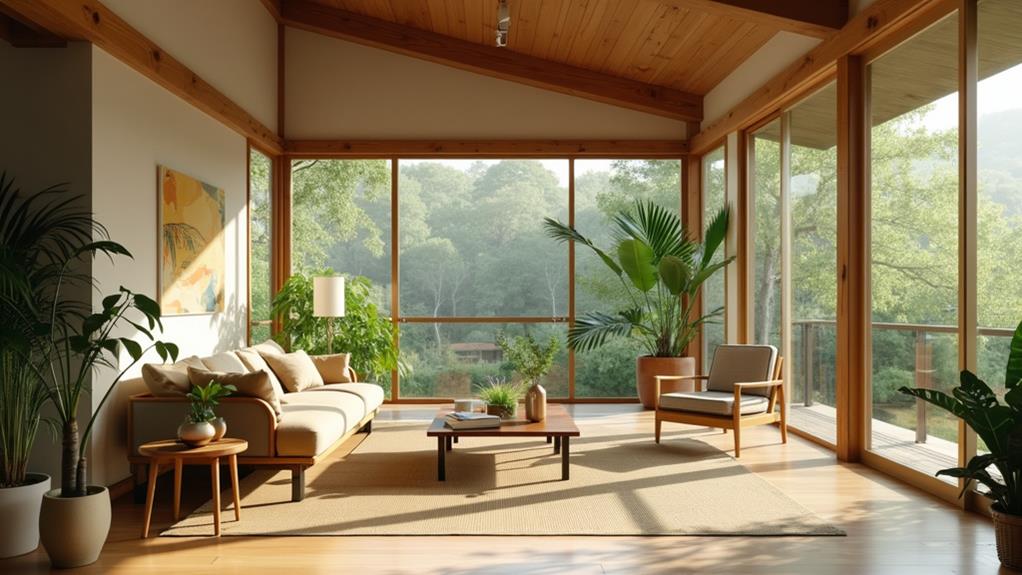
Japanese minimalism offers a compelling approach to modern sustainability by emphasizing the use of eco-friendly natural materials like bamboo and wood instead of synthetic options. Incorporating these materials into your home decor reduces your environmental impact and promotes sustainable living.
The focus on functional design in Japanese minimalism allows you to benefit from multi-purpose furniture, reducing the need for excess items and minimizing waste. For instance, a coffee table that doubles as storage or a sofa that transforms into a bed serves multiple functions, thereby reducing clutter and consumption.
Incorporating elements like indoor plants and natural light, inspired by the Japanese principle of Shakkei (borrowed scenery), enhances indoor air quality and creates a healthier living environment. Additionally, the trend of decluttering, popularized by the KonMari method, encourages you to keep only items that serve a purpose or bring joy, aligning perfectly with sustainable living and reducing overall consumption.
Many contemporary brands influenced by Japanese minimalism prioritize eco-friendly production practices. By choosing these brands, you contribute to a more sustainable home decor industry, making a positive impact on the planet.
Timeless Aesthetic
The enduring appeal of Japanese minimalism lies in its clean lines and uncluttered spaces, cultivating a sense of serenity and tranquility in your home. Embracing this style creates an environment that is both calming and lasting.
Key elements that define this timeless aesthetic include:
- Neutral color palettes: Inspired by nature, these colors harmonize with various design elements to create a tranquil atmosphere.
- Natural materials: Utilizing wood, bamboo, and rice paper adds authenticity and a deep connection with the environment to your space.
- Negative space ("Ma"): Thoughtful placement of furniture and decor highlights the importance of empty space, resulting in a balanced and peaceful living area.
- Wabi-Sabi: Celebrating beauty in imperfection and the transient nature of objects adds a personal and meaningful touch to your home.