The Influence of the Memphis Group on 1980s Decor
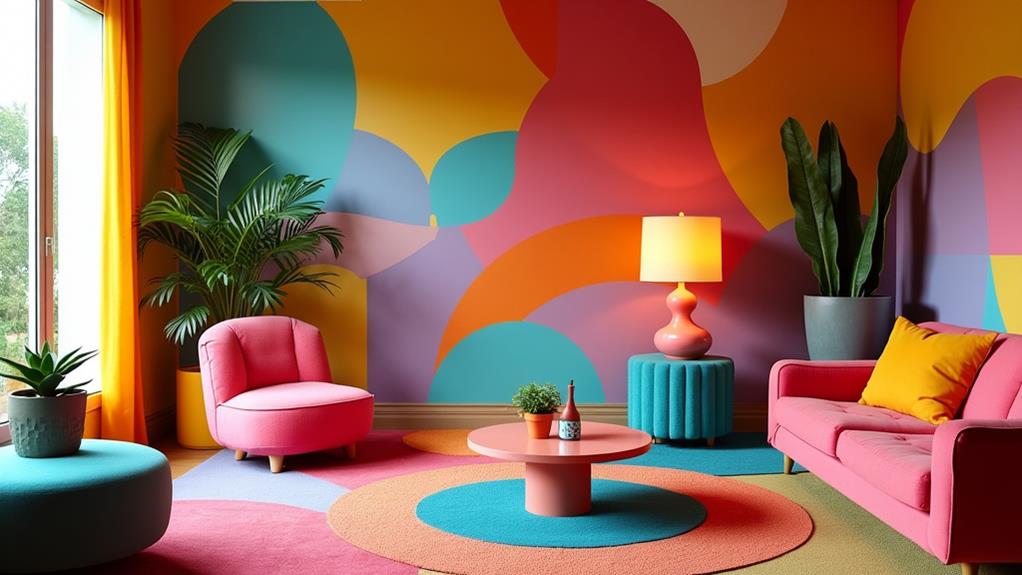
The bold and lively influence of the Memphis Group is integral to understanding 1980s decor. Founded by Ettore Sottsass, this collective challenged the minimalist status quo with eclectic designs characterized by playful geometric shapes, vivid colors, and unconventional materials. Their work resonated with the rebellious youth culture of the time, making pieces like the Carlton Room Divider and the Tahiti Chair iconic symbols of the period. What drove this audacious design philosophy, and how did it ripple through fashion and contemporary design? Let's explore further.
Origins of Memphis Group
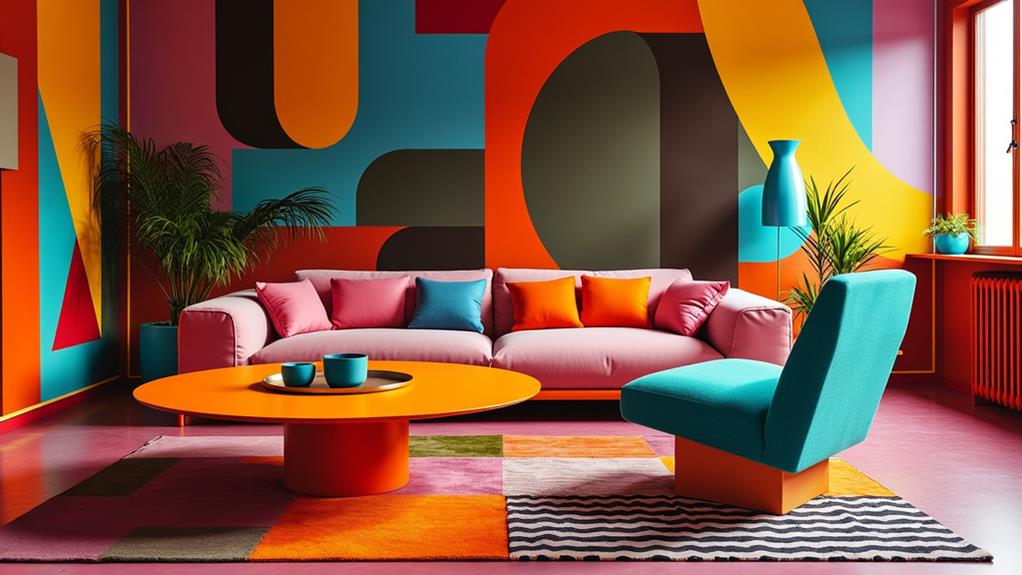
Founded in December 1980, the Memphis Group's influence on design was profound and enduring. Led by Ettore Sottsass and a collective of innovative, young designers in Milan, the group aimed to disrupt the prevailing Modernist design principles. They named themselves after Bob Dylan's song "Stuck Inside of Mobile with the Memphis Blues Again," which played during their initial brainstorming session, epitomizing their unconventional mindset.
The Memphis Group's design philosophy embraced irony and humor, purposefully rejecting the era's minimalism and functionalism. They favored bold, colorful designs that were both whimsical and impactful. This approach not only made their pieces visually engaging but also thought-provoking, encouraging discussions about design's role in daily life.
Their first major exhibition in 1981 showcased these daring creations, eliciting strong reactions from both the design community and the public. Although the group disbanded in 1987, their imaginative approach and unique style left a lasting legacy. Their influence is evident in the vibrant, eclectic aesthetics that characterized the 1980s and continue to inspire designers today.
Founding Members
The Memphis Group was founded in 1980 by Ettore Sottsass, a key figure in post-war design who aimed to transform the design landscape. Under his leadership, the group became a hub of creativity, attracting talented designers such as Martine Bedin, Nathalie Du Pasquier, Michele De Lucchi, Peter Shire, and Marco Zanini. Each member contributed unique attributes that shaped the group's distinctive and eclectic style.
Martine Bedin, celebrated for her innovative lighting designs, introduced elements of whimsy and practicality. Nathalie Du Pasquier, with her expertise in textile and pattern design, was instrumental in defining the group's vibrant and bold aesthetic. Peter Shire, acclaimed for his playful teapot designs, infused humor and a sense of fun into their creations. Michele De Lucchi and Marco Zanini also played pivotal roles, making notable contributions in furniture and ceramics.
Here's a quick overview of some key founding members:
| Designer | Known For |
|---|---|
| Ettore Sottsass | Leadership, Post-war Design |
| Martine Bedin | Lighting Designs |
| Nathalie Du Pasquier | Textile and Pattern Design |
| Peter Shire | Playful Teapot Designs |
| Michele De Lucchi | Furniture Design |
| Marco Zanini | Ceramics |
These founding members fostered a collaborative environment that challenged traditional design norms and left a lasting impact on 1980s decor.
Design Philosophy
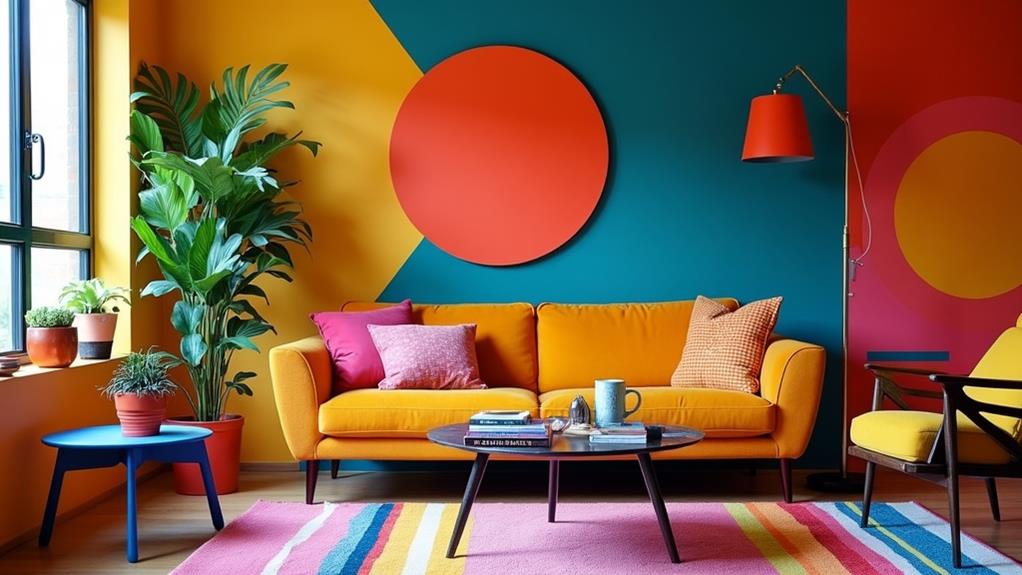
Embracing a bold departure from minimalism and functionalism, the Memphis Group's design philosophy celebrated irony and humor. Their approach wasn't about blending in or staying subtle; they rejected traditional norms, opting for bright colors and geometric shapes that injected playful energy into their work. The Memphis style wasn't just about making a statement; it aimed to provoke thought and emotion through decorative creativity.
Their mantra, "Less is Bore," encapsulated their commitment to vibrant, eclectic designs. By incorporating unconventional materials and whimsical forms, Memphis designers blurred the lines between art and functional items. Their creations weren't just furniture; they were conversation pieces that challenged conventional notions of decor.
The Memphis Group's use of irony and humor redefined 1980s aesthetics, infusing everyday objects with a sense of fun and playfulness. This approach made their designs not only visually striking but also memorable. Whether it was a lamp, a chair, or a table, each piece invited users to experience decor in a completely new way, transforming the ordinary into the extraordinary.
Key Characteristics
Memphis Group decor is immediately recognizable for its bold, often contrasting color schemes. It features playful geometric shapes and abstract patterns, such as circles and triangles, which infuse spaces with energy and creativity. These design elements defy traditional norms, embracing a sense of fun and innovation.
Bold Color Combinations
Imagine a world where colors burst from every surface, enveloping you in vibrant hues that defy conventional design. This is the essence of Memphis design, a movement celebrated for its bold color combinations. Breaking away from the subdued palettes of earlier design periods, it embraced bright primary and secondary colors. The Carlton Room Divider is a prime example, showcasing a mix of clashing colors and patterns to create a visually striking piece.
During the 1980s, the Memphis Group designers didn't limit themselves to traditional materials. They employed plastic laminate and other unconventional substances to achieve their vivid color effects. This approach led to innovative, eye-catching pieces that challenged conventional notions of taste and decor. The bold color combinations paired with geometric shapes made these designs unforgettable.
Memphis design's daring color palette extended beyond interior decor, influencing fashion and graphic design. The bright color schemes became synonymous with the exuberance of 1980s pop culture. Reflecting on that era, it's clear how these lively hues added a playful yet rebellious twist to the decade's aesthetic.
Geometric Shapes and Patterns
Geometric shapes and patterns are a cornerstone of the Memphis Group's avant-garde design philosophy. Their work is distinguished by bold geometric shapes such as triangles, circles, and rectangles, which have become iconic symbols of 1980s decor. The group frequently employed asymmetrical forms, moving away from traditional symmetry to introduce a sense of playful chaos into furniture and decor.
Memphis patterns often featured vibrant colors combined with contrasting black-and-white elements, resulting in visually striking compositions. By layering and integrating geometric patterns, they created dynamic surfaces and textures that defied conventional design norms. Additionally, the Memphis Group utilized unconventional materials like plastic laminate and mixed media, enabling them to present geometric shapes in innovative and unexpected ways.
To provide a clearer understanding, here is a table summarizing key characteristics:
| Geometric Shapes | Asymmetrical Forms | Unconventional Materials |
|---|---|---|
| Triangles | Playful Chaos | Plastic Laminate |
| Circles | Defied Symmetry | Mixed Media |
| Rectangles | Dynamic Surfaces | Creative Use |
Iconic Pieces
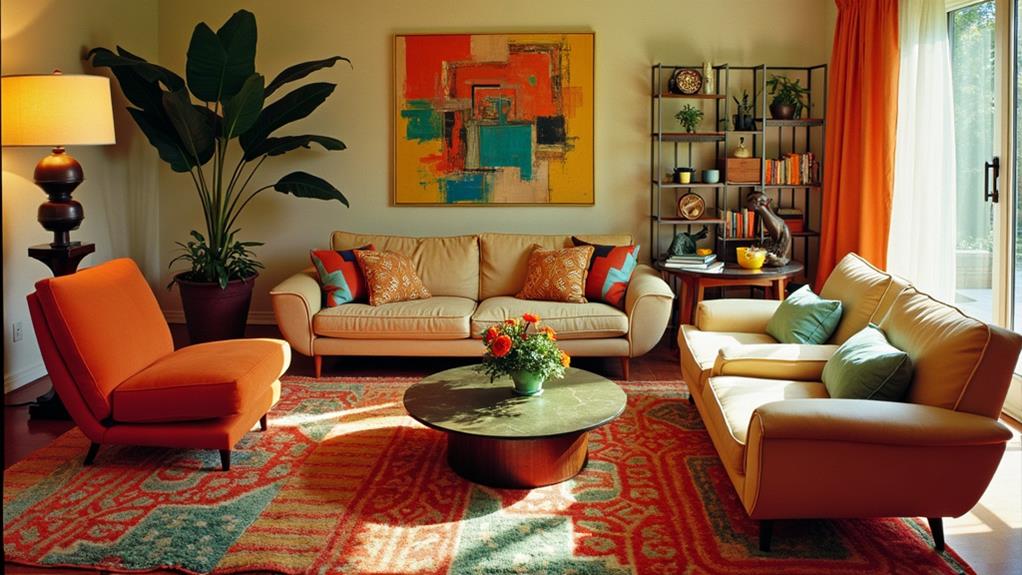
The Memphis Group's influence on 1980s décor is epitomized by several iconic pieces that redefined interior design with their bold aesthetics and creative forms. One standout design is the Carlton Room Divider by Ettore Sottsass. Created in 1981, this piece is a hallmark of Memphis Group's style, featuring bold colors and playful geometric shapes. It became a must-have in fashionable interiors of the time.
Another remarkable creation is the Tahiti Chair. Its lively colors and abstract forms exemplify the Memphis Group's departure from traditional furniture, emphasizing creativity over functionality. This chair, like other Memphis pieces, turned conventional design on its head.
The Sottsass Coffee Table is another iconic example, notable for its eclectic mix of materials and textures. This table showcased the Memphis Group's groundbreaking approach, blurring the lines between art and utility.
The Bel Air Sofa, with its fanciful style and bright patterns, became a staple in 1980s living rooms, reflecting the Memphis aesthetic's exuberance. Finally, the Cactus Series mimicked natural forms, pushing design boundaries and becoming a symbol of the era's artistic experimentation.
Cultural Impact
The Memphis Group's bold visual statements captured the essence of 1980s youth culture, appearing everywhere from MTV's logo to the set of "Saved by the Bell." Their playful and expressive designs marked a clear departure from the previous decade's minimalism, signaling a significant cultural shift.
Youth Culture Integration
At first glance, the Memphis Group's design might appear chaotic, but its lively and eclectic aesthetic resonated deeply with 1980s youth culture. The vivid colors and geometric patterns mirrored the rebellious spirit of the era, contrasting sharply with the minimalist designs of previous decades. MTV, the quintessential youth-oriented media outlet, adopted Memphis design elements for its logo and set designs, embedding the style into the visual identity of pop culture.
This playful decor extended beyond television, influencing fashion collections that captivated young consumers. Brands targeting the youth market emphasized chaotic color palettes and unconventional shapes, reflecting the Memphis Group's bold approach. The fanciful aspects of this design style provided a refreshing alternative to traditional aesthetics, making it popular among the younger generation.
Television shows like "Saved by the Bell" further integrated Memphis design into mainstream youth culture. The bright, bold sets became a defining visual language of the time, solidifying the Memphis Group's influence. By embracing this eclectic style, the youth of the 1980s found a unique way to express their individuality and break free from conventional norms.
Bold Visual Statements
In the 1980s, the Memphis Group's bold visual statements disrupted the monotony of minimalist design, infusing lively colors and geometric shapes into the cultural zeitgeist. Their vibrant hues and provocative designs became emblematic of the era, influencing postmodern furniture, fashion, and graphic art. Their impact was ubiquitous—furniture featured clashing colors and unconventional materials that challenged traditional notions of good taste.
This shift towards playful expression directly responded to the minimalist trends of the 1960s and 1970s. The Memphis Group celebrated individuality and creativity, rebelling against uniformity. They parodied high-class culture by using inexpensive materials and naming pieces after luxury hotels, adding a satirical edge that resonated with the public.
One of the most iconic adoptions of Memphis aesthetics was by MTV for its logo and set design. This move embedded the style deeply into youth culture, making it an integral part of the visual identity of the decade. When you think of the 80s, it's hard not to picture the bold visual statements and striking colors that defined the Memphis Group's influence.
Influence on Fashion

The Memphis Group's bold design ethos left an indelible mark on 1980s fashion, infusing wardrobes with lively colors and geometric patterns. Fashion designers eagerly embraced this dynamic aesthetic, incorporating it into their collections. The era saw an explosion of vibrant colors and eclectic clothing, making everyday wear playful and eye-catching.
Influential designers like Dior and Missoni later echoed this iconic style in their 2011 and 2015 collections, showcasing bright patterns and shapes reminiscent of the Memphis Group. Accessories and textile designs also reflected this influence, with Nathalie Du Pasquier's patterns becoming staples in numerous fashion collaborations. These striking designs added a dash of Memphis flair to various outfits.
The Memphis aesthetic extended beyond high fashion, permeating pop culture as well. Iconic costumes from series like "Saved by the Bell" exemplified the period's dynamic design ethos, making the bold, geometric styles of the Memphis Group a cultural phenomenon. High fashion brands adopted these designs for runway looks, offering a stark contrast to the minimalist trends of previous decades.
Legacy in Design
The Memphis Group's influence extends far beyond fashion, leaving a significant and enduring impact on the broader design world. Their lively and eclectic creations marked a distinct departure from the minimalist aesthetics that had previously dominated the design landscape. With their bold use of color, geometric shapes, and unconventional materials, the Memphis Group crafted a distinctive style that captivated designers across various fields, including furniture, textiles, and graphic design.
Iconic pieces like the Carlton Room Divider and the Tahiti Chair epitomize the Memphis ethos, celebrated for their playful and whimsical nature. These designs not only caught the eye but also set trends, frequently featured in leading magazines and exhibitions. The group's influence persisted beyond the 1980s, with major fashion brands such as Dior and Missoni incorporating Memphis-inspired elements into their collections well into the early 2010s.
The lasting cultural significance of Memphis designs is underscored by their recognition in prestigious institutions like the Victoria & Albert Museum. Their impact on contemporary design trends remains palpable today, highlighting the profound and enduring contribution of the Memphis Group to the design community.
Notable Collectors
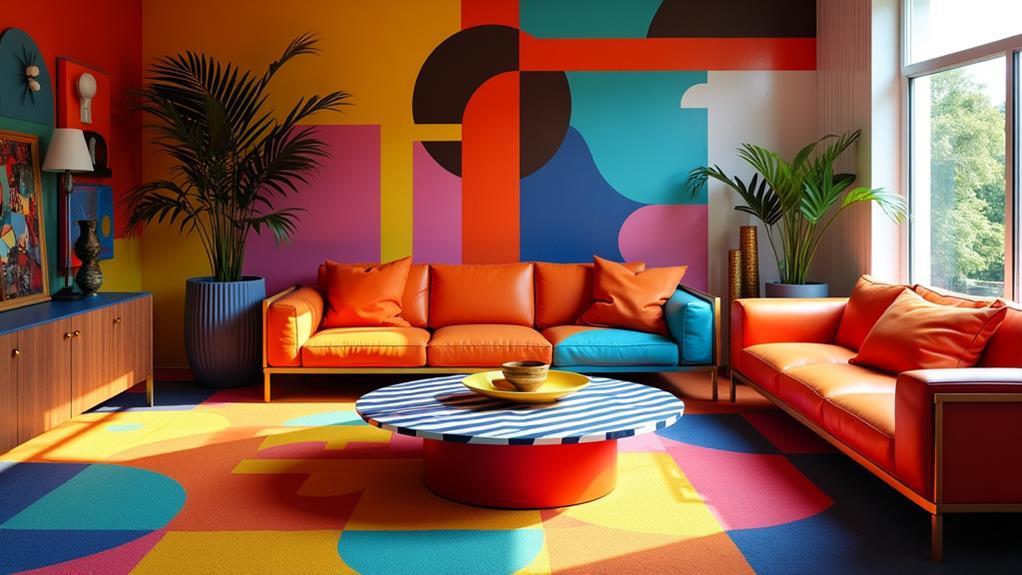
Iconoclasm often sparks fascination, and the Memphis Group's designs were no exception. In the realm of notable collectors, the Memphis Group's bold, postmodern creations captivated many cultural icons of the 1980s pop culture scene. Fashion designer Karl Lagerfeld, celebrated for his eclectic taste, was a prominent collector. His appreciation for the group's rebellious aesthetics underscored his embrace of nonconformity.
Music legend David Bowie was another high-profile collector. His Memphis pieces were so valued that they were auctioned posthumously, further cementing the group's appeal among influential figures. The presence of Memphis designs in the homes of such icons reflected a broader acceptance and admiration for postmodern design, marking a departure from traditional aesthetics.
Beyond Lagerfeld and Bowie, other collectors from diverse industries were also drawn to Memphis, highlighting its wide-reaching impact. These notable figures didn't simply collect; they elevated the Memphis Group to a symbol of 1980s pop culture and design rebellion. Their collections were not just personal treasures but cultural statements resonating with the spirit of the decade.
Further Exploration
Having explored notable collectors who championed the Memphis Group, let's now consider how you can further investigate this influential design movement.
Start by visiting museums and galleries that showcase Memphis Group pieces. Iconic works like the "Carlton" Room Divider and the "Tahiti" Chair offer a firsthand look at the lively, eclectic aesthetic that revolutionized 1980s decor with bold colors and geometric shapes.
Delve into literature and documentaries about the Memphis Group to understand their philosophy, particularly their use of unconventional materials such as plastic laminate. This will deepen your appreciation for how they challenged traditional notions of luxury and decor.
Explore contemporary design stores and online platforms that sell Memphis-inspired items. These often incorporate the movement's playful and whimsical qualities, demonstrating its enduring influence on modern decor trends.
Additionally, examine the impact of the Memphis Group on other fields like fashion and graphic design. For instance, brands like MTV adopted Memphis aesthetics for their logos and visuals, reflecting the movement's broader cultural reach.