Unlikely Disco Icons: Celebrities You Didn’t Know Loved Disco Music
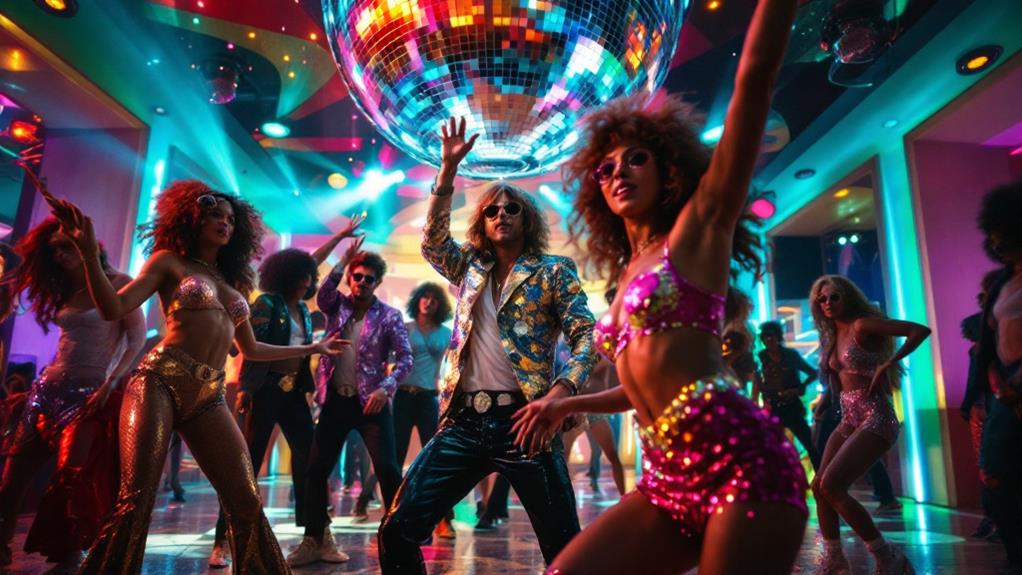
You might be surprised to learn that some of music's biggest icons secretly grooved to disco beats. David Bowie investigated disco with Giorgio Moroder, while Elton John embraced the genre's infectious rhythms. Mick Jagger, the Rolling Stones frontman, practiced disco moves in private. John Lennon returned to music with a disco-influenced album, and Debbie Harry of Blondie blended punk with disco's dance floor appeal. Even Rod Stewart transformed his sound with disco elements. These unlikely disco enthusiasts prove that the genre's influence reached far beyond the typical nightclub scene. Uncover how these musical chameleons found their rhythm under the glittering disco ball.
David Bowie's Disco Affair
Bowie's disco exploration didn't stop there. He collaborated with renowned disco producer Giorgio Moroder on "Cat People (Putting Out Fire)" for the 1982 film soundtrack. In 1980, he released "Ashes to Ashes," a top-five UK hit that incorporated disco elements, showcasing his willingness to experiment with the genre. The emergence of disco fashion in New York City underground clubs in the late 1960s was a key influence on Bowie's evolving style during this period.
The pinnacle of Bowie's disco affair came with his 1983 album "Let's Dance." Heavily influenced by disco, the title track became one of his biggest commercial successes. This album solidified Bowie's reputation as a musical chameleon, proving he could command any genre he touched.
Bowie's embrace of disco demonstrated his incredible versatility as an artist. While primarily known as a glam rock icon, he fearlessly ventured into new musical territories, leaving an everlasting mark on the disco scene.
Elton John's Glittery Groove
While Elton John is best known for his rock ballads and pop hits, he also had a surprising love affair with disco. You might not expect it from the man behind "Rocket Man," but Elton investigated the Disco Era with open arms, incorporating its infectious rhythms and glittery aesthetic into his music and image. Elton's love for disco extended beyond the music itself, as he often sported flamboyant costumes and extravagant stage designs that drew inspiration from disco culture.
In 1978, Elton released "Boogie Pilgrim," an album that showcased his affinity for disco music. He didn't stop there, though. The following year, he collaborated with legendary disco producer Giorgio Moroder on "Victim of Love," a track that could've easily been mistaken for a Donna Summer hit. This partnership highlighted Elton's genuine appreciation for the genre, proving he wasn't just jumping on the bandwagon. Elton's willingness to investigate different musical styles, from Philly soul to full-on disco, demonstrated his versatility as an artist. While many rock stars shunned disco, Elton John's glittery groove proved that even the most unlikely artists could find their place on the dance floor.
Mick Jagger's Secret Dance Floor
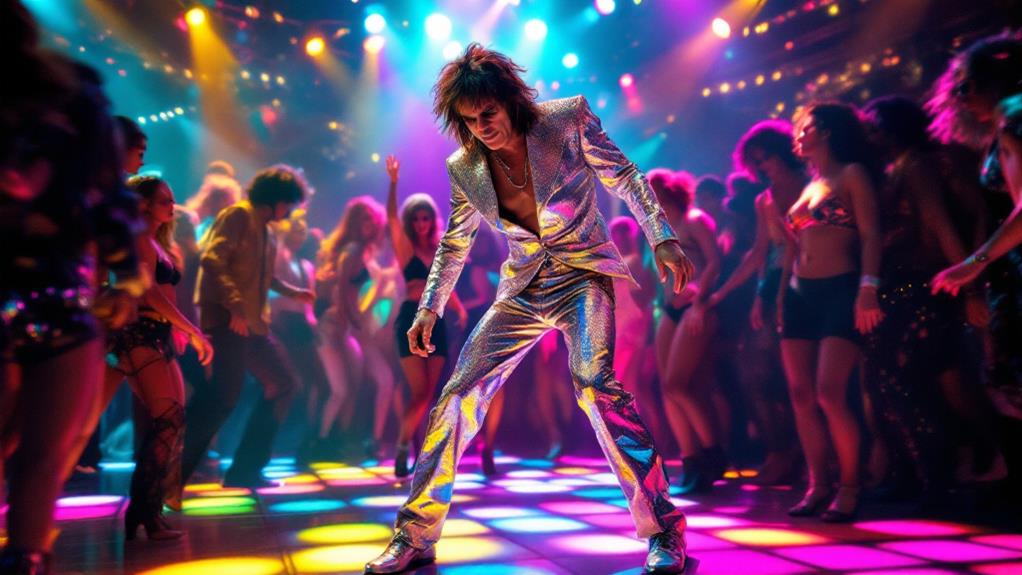
Elton John wasn't the only rock legend with a hidden disco passion. Mick Jagger, the iconic frontman of the Rolling Stones, harbored a secret love for the glittering world of disco.
You might think of Jagger as the epitome of rock 'n' roll, but beneath that macho exterior beat the heart of a disco devotee. While the Stones were busy cultivating their hard-rocking image, Jagger was sneaking off to indulge in private disco dancing sessions. He found the infectious rhythms and flamboyant style of disco music liberating, a stark contrast to the band's tough persona.
Jagger's clandestine affair with disco nearly came to light when a bandmate caught him practicing the "Robot" dance move in his hotel room. Despite the close call, he managed to keep his passion under wraps for years. However, his love for the genre seeped into the Stones' music, most prominently in the disco-influenced track "Shattered" from their 1978 album "Some Girls."
It wasn't until later in his career that Jagger openly acknowledged disco's influence on his dance moves and musical sensibilities, revealing the soul behind his secret dance floor obsession.
John Lennon's Unexpected Disco Phase
Few musical plunges were as surprising as John Lennon's unexpected foray into disco. You might not have expected the former Beatle to investigate the glittery world of disco music, but in the late 1970s, that's exactly what he did.
After a five-year hiatus, Lennon returned to the music scene with a disco-influenced album, "Double Fantasy," collaborating with his wife Yoko Ono and renowned producer Giorgio Moroder. This shift in style was a stark departure from his earlier work and previous disdain for mainstream pop music. Lennon's desire to connect with a younger audience and examine new musical territories drove this unexpected transition.
The album became both a critical and commercial success, solidifying Lennon's place in the disco milieu. His willingness to adapt to the changing music scene showcased the genre's widespread appeal, even among rock icons. Unfortunately, Lennon's disco phase was cut short by his tragic assassination shortly after the album's release. Despite its brevity, this unexpected chapter in Lennon's career remains a declaration of his artistic versatility and the far-reaching influence of disco music during that era.
Rod Stewart's Disco Transformation
In 1979, Stewart released "Blondes Have More Fun," an album that welcomed disco wholeheartedly. The record's standout track, "Da Ya Think I'm Sexy?", became a disco hit that rivaled even the Bee Gees' chart-toppers. While some fans cried foul, accusing Stewart of selling out, he insisted he genuinely enjoyed the disco sound.
Stewart's foray into disco was brief, but it showcased his versatility as an artist. He challenged perceptions of the genre, proving that even established rock stars could find success on the dance floor. Although he returned to his rock roots before Disco Demolition Night signaled the genre's decline, Stewart's disco metamorphosis left a permanent mark on his career and helped bridge the gap between rock and disco in popular music.
Debbie Harry's Disco Playground
Versatility defined Debbie Harry's approach to music, and nowhere was this more evident than in her adoption of disco. As the frontwoman of Blondie, Harry seamlessly blended punk and New Wave with disco's infectious rhythms. Her collaboration with Giorgio Moroder on "Call Me" in 1979 showcased her ability to welcome disco's evolving sound while maintaining her edgy persona.
You'll be amazed by how Debbie Harry's disco playground transformed both her music and image:
- Her glitzy outfits and bold makeup became an iconic part of her visual identity.
- Blondie's 1978 album "Parallel Lines" merged punk attitude with disco's dance floor appeal.
- Harry's covers of classic disco tracks like "Heart of Glass" expanded the boundaries of punk and New Wave.
As disco altered, so did Debbie Harry's artistic expression. Her willingness to investigate the genre helped redefine what punk and New Wave could sound like. By fearlessly incorporating disco elements into Blondie's music, Harry created a unique blend that resonated with fans across multiple genres, solidifying her status as an unlikely but influential disco icon.