What Were the Most Popular Furniture Styles in Disco Clubs?
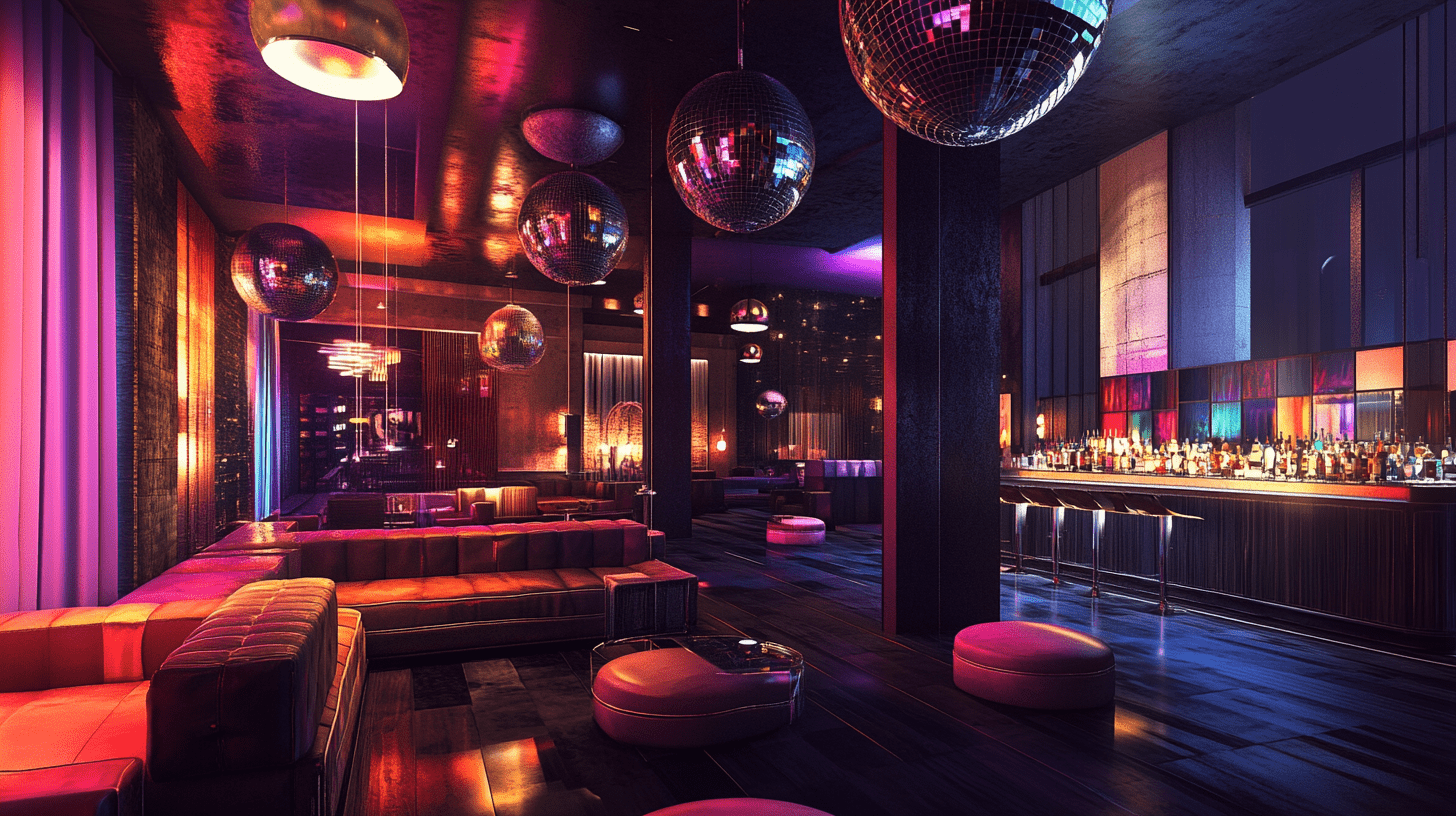
When considering the most popular furniture styles in disco clubs, plush upholstered seating stands out as a defining feature. Velvet and leather in vibrant hues like deep red and bold orange were common, offering both luxury and comfort.
Geometric shapes and mirrored surfaces added modernity and dynamism, while chrome accents perfectly captured the colorful lighting. Vinyl upholstery and futuristic designs also played key roles in creating an energetic atmosphere. What truly set these spaces apart were the sleek silhouettes and flashy materials that defined the iconic disco era.
Plush Upholstered Seating
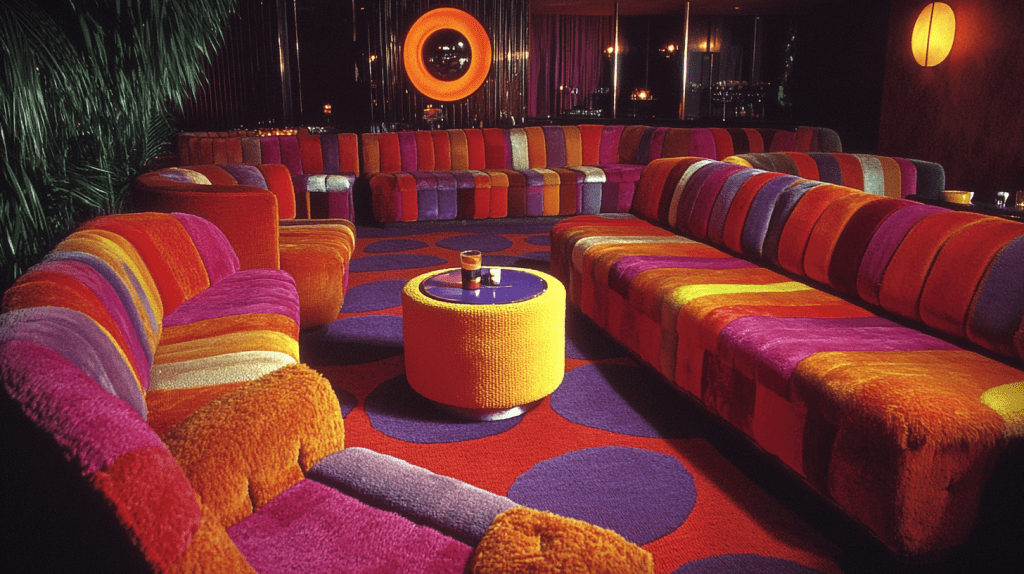
Plush upholstered seating in 1970s disco clubs wasn't merely about comfort; it embodied luxury and style. Upon entering a disco club, one of the first things you might notice were the sofas, loveseats, and lounge chairs draped in materials like velvet, faux fur, and leather. These fabrics were chosen deliberately for their opulent feel and appearance, transforming every seating area into a VIP experience.
The vibrant hues of these plush upholstered pieces were crucial in fostering the energetic ambiance for which disco clubs were famous. Picture sinking into a deep red or bold orange sofa, with oversized cushions and deep tufting that beckoned relaxation and socialization. The low-slung designs of these furniture pieces created intimate spaces, encouraging guests to get comfortable and enjoy the music.
Plush upholstered seating was designed not just for aesthetics but for comfort as well. These arrangements ensured that you and your friends could take a break from dancing while still feeling immersed in the vibrant, stylish environment.
Geometric Shapes
Plush upholstered seating offered comfort and luxury, while geometric shapes added a modern and dynamic flair to disco club furniture. Tables, chairs, and sofas often featured bold patterns like squares, circles, and triangles. These shapes weren't just decorative; they played a crucial role in mirroring the vibrant atmosphere of disco clubs.
By integrating geometric shapes into the furniture design, clubs created a visually stimulating environment that matched the energy of the music and dancing. Imagine sitting on a sofa with triangular armrests or placing your drink on a circular table. These designs were both practical and artistic, enhancing the overall aesthetic appeal.
The use of geometric shapes gave the furniture a futuristic touch, making it feel as though you were stepping into a modern, stylish world each time you entered a club. This design choice enriched the retro and stylish ambiance, making the club experience unforgettable.
Mirrored Surfaces
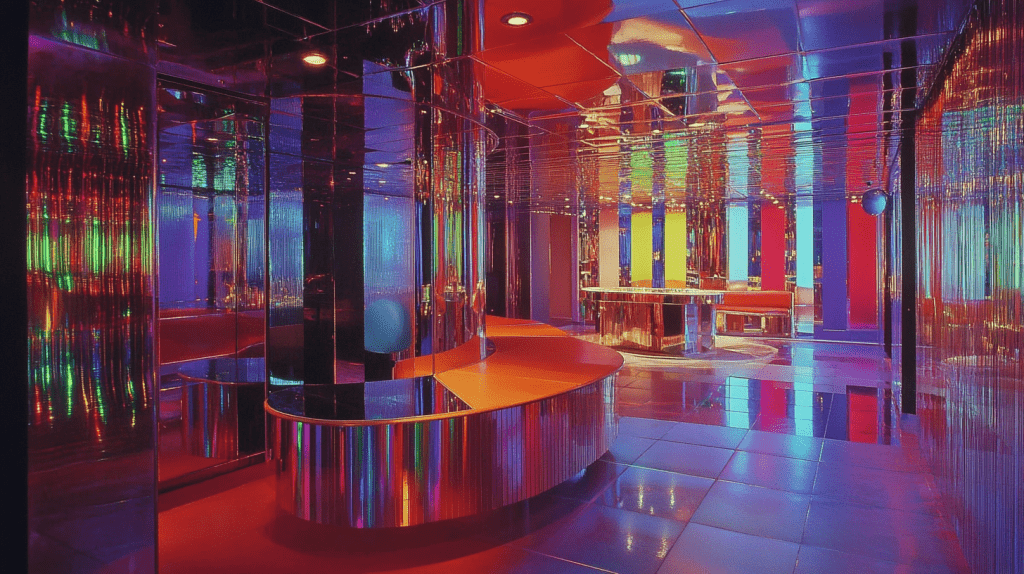
Mirrored surfaces in disco clubs reflected vibrant lights, instantly creating a sense of glamour and excitement. Upon entering a disco club, you were greeted by dazzling lights bouncing off mirrored walls, ceilings, and furniture. This design choice wasn't just about aesthetics; it amplified the visual impact, making the space feel larger and more dynamic.
Incorporating mirrored surfaces into the furniture was a popular trend. Common elements included:
- Mirrored tables: These caught the dance floor lights, creating a mesmerizing effect.
- Mirrored cabinets: They added both storage and sparkle, enhancing the club's ambiance.
- Mirrored bars: Serving as focal points, they reflected vibrant lights and drew guests in.
The reflective quality of these surfaces wasn't just for show; it added depth and dimension, making the interior feel more immersive. Pairing mirrored surfaces with sparkling lights and bold colors created a dynamic, almost otherworldly experience.
Chrome Accents
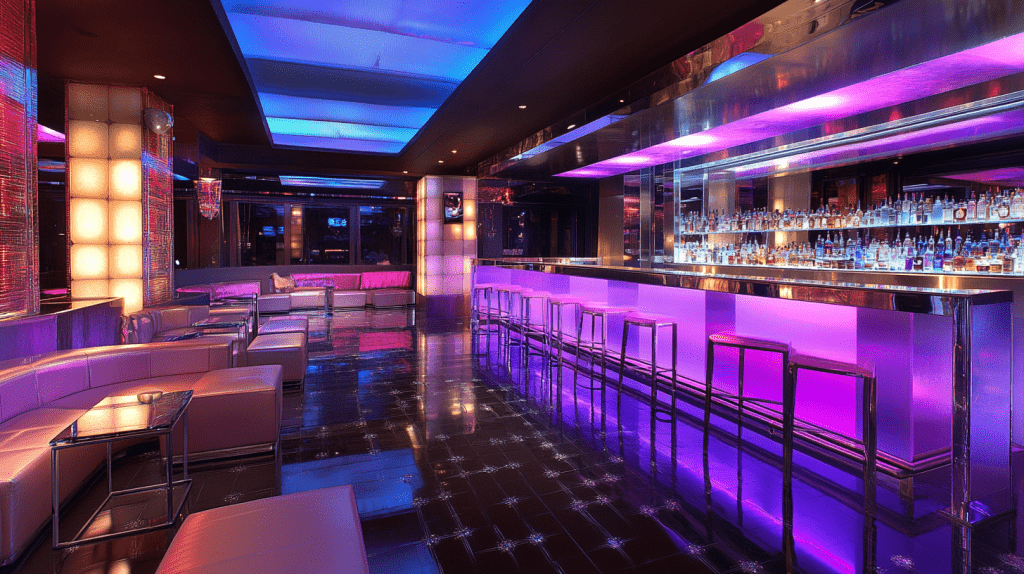
Chrome accents revolutionized disco club interiors with their sleek metallic finishes that epitomized modernity. Their reflective surfaces not only looked appealing but also amplified the club's vibrant energy. These accents were both stylish and durable, making them an ideal choice for high-traffic areas.
Sleek Metallic Finishes
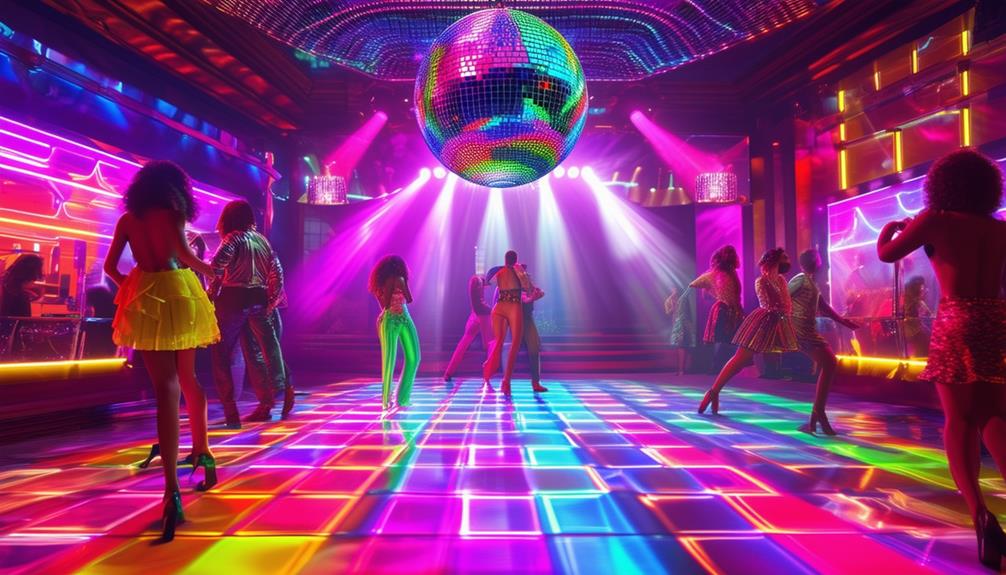
Disco clubs flourished on the futuristic ambiance crafted by sleek metallic finishes, with chrome accents playing a crucial role in their dazzling decor. Upon entering a disco club during the disco era, the first thing you'd notice was the shiny, reflective surfaces that captured the colorful lights and bouncing disco balls. Chrome accents were ubiquitous, enhancing the futuristic atmosphere that defined 1970s nightlife.
Consider these three key elements that contributed to the disco club experience:
- Chrome Bar Stools: These stools, with their gleaming legs and often vinyl-covered seats, were essential in any disco club, offering both style and comfort.
- Chrome Tables: Sleek tables with chrome frames and glass tops added sophistication while reflecting the pulsating lights from the dance floor.
- Chrome Accented Seating: Lounge areas frequently featured plush seating with chrome accents, creating a modern and inviting space for guests to relax between dances.
The use of chrome finishes wasn't just about aesthetics; it was about creating a cohesive, stylish, and energetic ambiance that epitomized the disco era. These metallic touches made every night out feel like stepping into a glamorous, futuristic world.
Reflective Surfaces Appeal
The allure of reflective surfaces, particularly chrome accents, played a pivotal role in amplifying the vibrant energy of disco clubs. These shiny elements were ubiquitous, gracing tables, chairs, and bar stools, all designed to catch and reflect the colorful, pulsating lights. Chrome accents didn't merely add a futuristic and modern look; they created a dynamic, ever-changing visual experience that became synonymous with the disco era.
Upon entering a disco club, the shimmering, almost hypnotic effect of the chrome accents would be immediately noticeable. They significantly contributed to the club's vibrant atmosphere, bouncing lights in all directions and enhancing the sense of movement and excitement on the dance floor. This wasn't solely about aesthetics; it was about crafting an immersive environment where every detail amplified the overall energy.
Chrome accents also introduced a touch of glamour and sophistication to the space. Their reflective nature complemented the bold, flashy design elements typical of disco decor, making the entire setting feel more cohesive and upscale.
Durable and Stylish
When you think of disco clubs, chrome accents stand out as a durable and stylish choice for furniture. These shiny finishes weren't just about aesthetics; they offered practical benefits ideal for the high-energy, high-traffic environment of disco clubs. For starters, chrome accents added a touch of glamour, reflecting vibrant disco lights and enhancing the club's flashy ambiance.
Imagine walking into a disco club and seeing:
- Chairs with chrome legs: These provided a sleek, modern look while being sturdy enough to withstand constant use.
- Tables with chrome frames: The reflective surfaces amplified the dazzling light show, making the environment even more electrifying.
- Chrome-trimmed bar stools: Easy to clean and maintain, they ensured that the club stayed fresh and inviting night after night.
The durability of chrome furniture meant it could handle the wear and tear of vibrant disco clubs without losing its luster. Additionally, its modern aesthetic perfectly complemented the energetic vibe of the scene.
Vinyl Upholstery
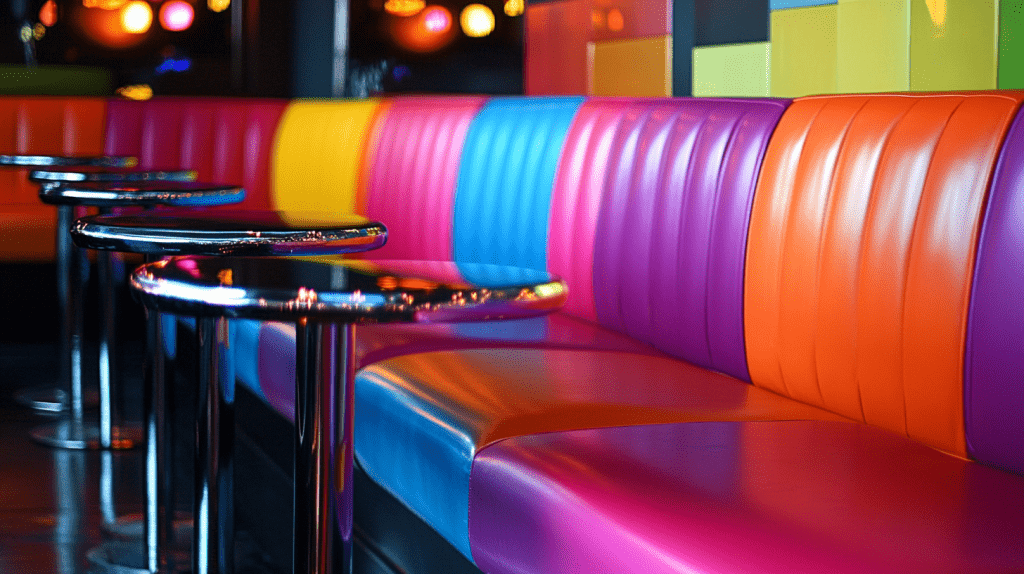
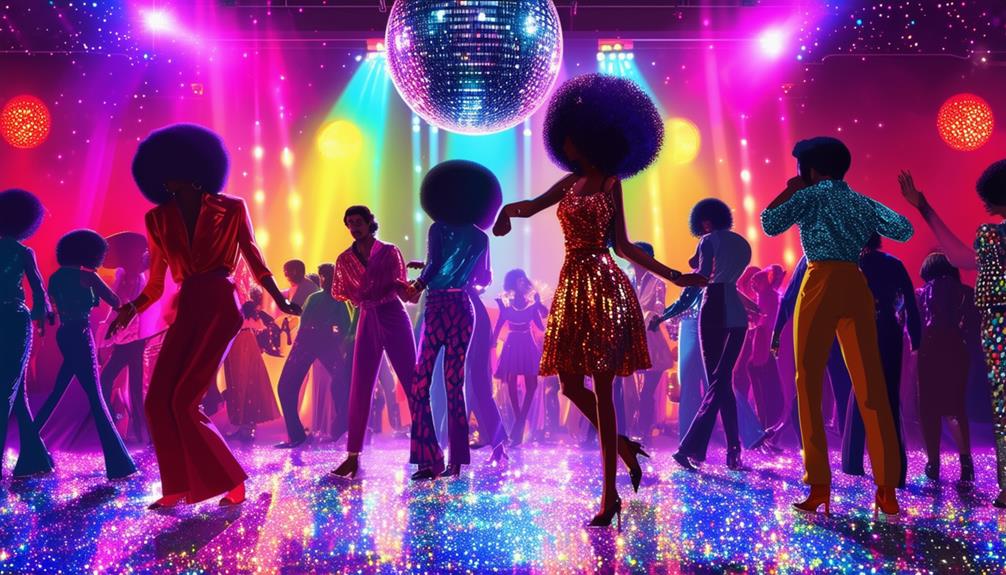
Vinyl upholstery became a staple in disco clubs for its durability, ease of cleaning, and shiny, glamorous look. Upon entering a club, one would immediately notice the vibrant colors adorning the sofas, chairs, and booths. These colors, paired with the reflective quality of vinyl, created an energetic atmosphere that matched the pulsating beats of the disco era.
Vinyl upholstery wasn't just visually appealing; it was highly practical. The material could withstand the wear and tear from countless nights of dancing and socializing. Spills and stains were easily wiped away, ensuring that the furniture maintained its fresh appearance night after night. This made vinyl a favorite among club owners who needed furniture that could handle heavy use without losing its stylish appeal.
Here's a snapshot of what you might see:
| Item | Description |
|---|---|
| Sofas | Long, plush seats in vibrant colors |
| Chairs | Comfortable, shiny single seats |
| Booths | Cozy, reflective seating arrangements |
| Tables | Sleek surfaces complementing the vinyl |
The use of vinyl upholstery in disco clubs was both a design choice and a practical solution, elevating the overall aesthetic and making each night an unforgettable experience.
Futuristic Designs
Envision futuristic designs in disco clubs with sleek metallic surfaces reflecting the space's vibrant energy. Neon lighting accents enhance the spectacle, casting bold colors and dynamic patterns. Space-age shaped furniture transforms the club into an immersive, otherworldly experience.
Sleek Metallic Surfaces
Disco clubs often dazzled patrons with sleek metallic surfaces, evoking a futuristic, space-age vibe. Reflective materials like chrome, steel, and mirrored finishes weren't mere decoration; they added glamour and sophistication, creating a visually stimulating environment that mirrored the high-energy music and dance culture of the period. Upon entering a disco club, the metallic surfaces would immediately catch and reflect every flicker of light, enhancing the vibrant atmosphere.
Key elements that defined this futuristic aesthetic included:
- Chairs and Bar Stools: Often crafted from chrome or steel, these pieces added a modern, luxurious touch to the club's interior.
- Tables: Mirrored tabletops were common, amplifying light and making everything seem more dynamic and alive.
- Decorative Accents: Metallic sculptures or wall panels further emphasized the space-age theme, creating a cohesive look.
Neon Lighting Accents

Neon lighting accents, with their vibrant and dynamic glow, were instrumental in shaping the futuristic designs of 1970s disco clubs. In New York, these lights transformed ordinary spaces into dazzling venues, creating an atmosphere where people, inspired by icons like David Bowie, felt transported to another world. The neon lights weren't merely decorative; they were essential in highlighting the pulsating energy of the era.
Picture walking into a disco club, the dance floors illuminated by neon lights. These glowing accents outlined every corner, creating a surreal, almost otherworldly ambiance that captivated visitors. The vibrant colors and constant motion of the lights above and below made the dance experience unforgettable. Bars and seating areas, too, were often adorned with neon accents, ensuring every part of the club exuded that electrifying vibe.
In these clubs, neon lighting was crucial in setting the tone and atmosphere, making each night feel like a special event. They weren't just lights; they were an experience, a memory, and a key component of the disco aesthetic that defined 1970s nightlife.
Space-Age Shapes
Space-age shapes, with their sleek lines and futuristic flair, defined the furniture styles that made 1970s disco clubs feel like a voyage into the future. In New York and northern Italy, designers drew inspiration from the Space Age era, creating pieces that were both bold and unconventional. The furniture often featured geometric shapes and pioneering materials such as chrome and plastic, adding a striking, modern edge to the club interiors.
Walking into a disco, you'd have seen:
- Chrome and Plastic Chairs: Sleek, reflective surfaces that caught the light and enhanced the club's vibrant atmosphere.
- Geometric Tables: Often round or kidney-shaped, these tables provided a smooth, flowing aesthetic.
- Modular Seating: Bold, colorful pieces that could be rearranged, encouraging social interaction and flexibility in layout.
These futuristic designs weren't just about looks; they symbolized a forward-thinking mindset. Club-goers, including icons like Bianca Jagger, were drawn to these spaces that promised progress and a glimpse into the future. The avant-garde aesthetics of space-age furniture made every night out feel like a cutting-edge experience, capturing the excitement and optimism of an era fascinated by technology and progress.
Sleek Silhouettes
Furniture in disco clubs embraced sleek silhouettes, clean lines, and modern designs, creating a sophisticated yet vibrant atmosphere. Picture stepping into one of New York's iconic disco clubs, where events unfold under dazzling lights. The furniture, whether a low-profile sofa or a curved chair, radiates a minimalist and chic vibe. You might notice modular seating arrangements that seamlessly adapt to the club's dynamic energy.
Reflective surfaces like chrome and mirrored finishes enhanced the visual appeal, amplifying the entire disco ambiance. Imagine a white horse statue glistening under the disco ball, its sleek silhouette a striking feature in the club. These reflective elements were integral, amplifying light and movement, making the space feel alive.
Geometric shapes and patterns were also key features of this style. The furniture wasn't only functional but visually engaging, adding a playful and dynamic element to the space. This blend of clean lines, modern designs, and reflective surfaces created an environment that was both sophisticated and exhilarating, perfectly capturing the essence of the disco era.
Bold Vibrant Colors
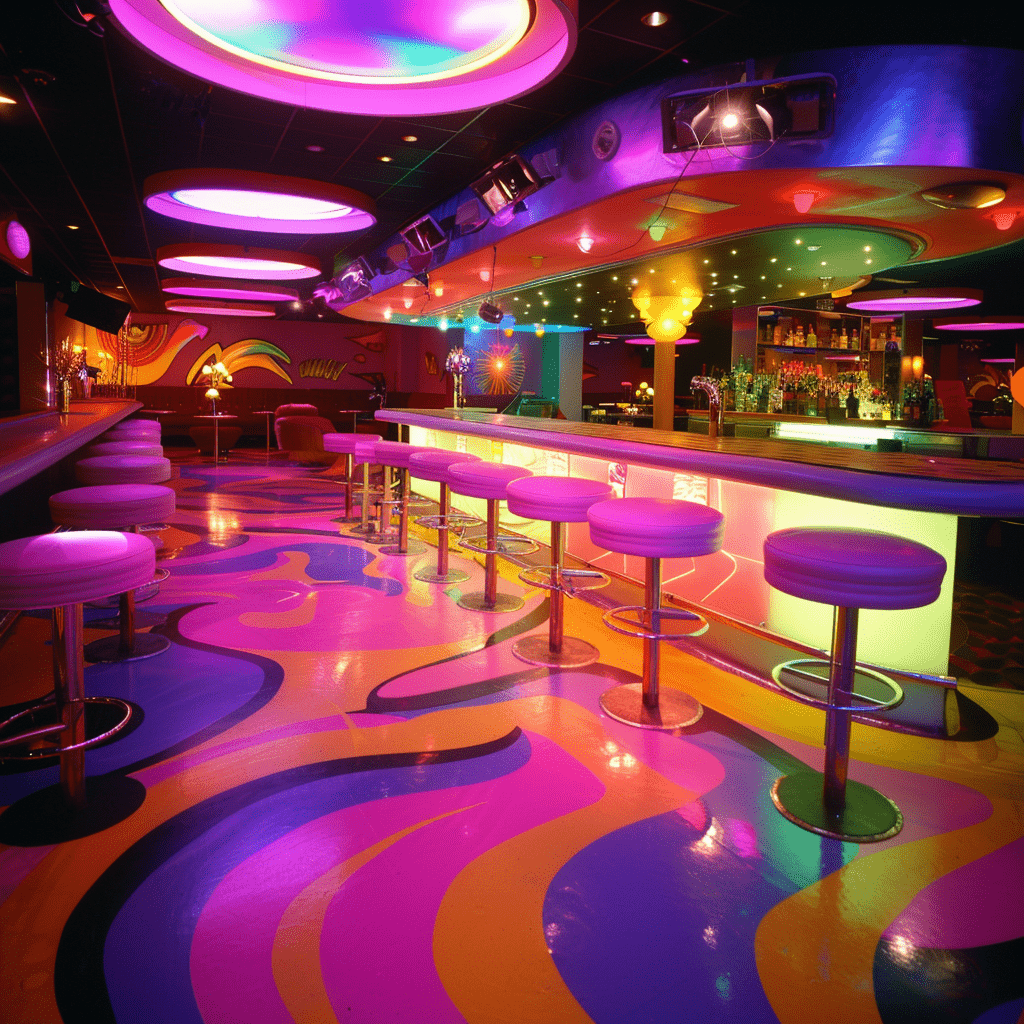
Beyond the sleek silhouettes and reflective surfaces, disco clubs came alive with bold, vibrant colors that electrified the atmosphere. Neon pinks, electric blues, and vibrant oranges dominated the scene, creating an energetic and dynamic environment. The choice of these colors wasn't accidental; they were selected to amplify the high-energy vibe that defined the disco era.
Furniture pieces were often upholstered in luxurious fabrics like velvet, making the decor not only impactful but also irresistibly inviting. Imagine sinking into a plush, neon blue velvet sofa while electric orange bar stools lined the perimeter. The strategic use of these bold colors didn't just decorate the space; it transformed it.
To help you visualize the ambiance, here are a few key elements:
- Neon pink sofas that grabbed your attention as soon as you entered.
- Electric blue bar stools that made every sip feel like a party.
- Vibrant orange lounge chairs that provided both style and comfort.
Today, modern spaces often borrow from disco's bold palette to create their own impactful decor, blending contemporary design with iconic elements.
Flashy Materials
Disco club furniture often dazzled with flashy materials like mirrored surfaces, glittering fabrics, and metallic finishes, all designed to amplify the club's vibrant atmosphere. The glittering fabrics would catch and reflect the dazzling lights, creating a kaleidoscope of colors and movement, making it an essential part of the immersive experience.
Luxurious velvet was another staple in disco furniture, adding an opulent feel. Imagine lounging on a plush, velvet-upholstered sofa, the fabric soft against your skin. The use of velvet and faux fur heightened the sense of exclusivity, making you feel part of something special.
Shiny textures were ubiquitous, from chrome bar stools to vinyl-covered seating, adding a futuristic edge to the space. The combination of bold colors, shiny textures, and plush fabrics didn't just create a visually striking environment; it made the space feel alive and inviting, encouraging you to stay and enjoy the night.
Conclusion
Popular furniture styles in disco clubs often featured plush velvet and leather seating in deep reds and bold oranges. Geometric shapes and mirrored surfaces added a modern touch, while chrome accents caught the colorful lights. Vinyl upholstery and futuristic designs contributed to an energetic vibe. Sleek silhouettes, vibrant colors, and flashy materials created an unforgettable, immersive atmosphere.