What Were the Unique Decor Trends of the 70s?
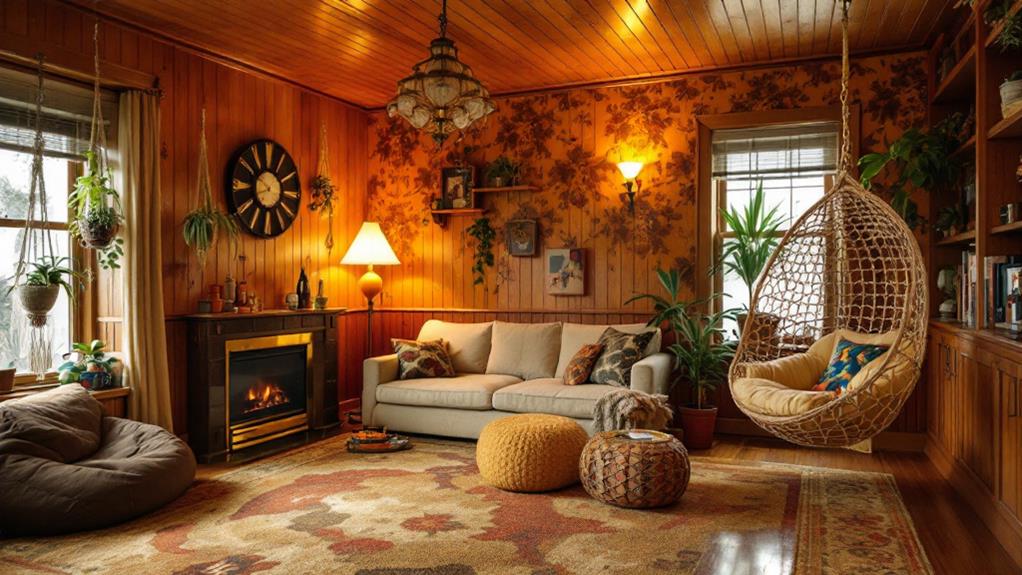
The 70s brought a bold, eclectic style to home decor. You'd find vibrant colors like avocado green and burnt orange paired with groovy patterns like paisley and animal prints. Natural materials took center stage, with rattan furniture, macramé plant hangers, and shag carpets creating textured, earthy spaces. Space-age inspired pieces, like Panton chairs and lava lamps, added a futuristic touch. Conversation pits and sunken living rooms became popular for casual gatherings. Quirky accessories, including mushroom lamps and ceramic figurines, completed the look. These unique trends blended comfort, personal expression, and optimism, reflecting the era's distinctive vibe. Plunge deeper to uncover the full palette of 70s decor.
Groovy Patterns and Bold Colors
The 1970s embraced a maximalist approach, encouraging you to mix and match styles and influences. This resulted in spaces that were expressive and visually complex. Texture played an indispensable role in creating depth and interest. You'd sink your toes into shag carpets, run your hands over three-dimensional wallpaper, and lounge on velvet textures. These tactile surfaces added another layer of sensory experience to the already lively interiors, making 70s decor a truly immersive experience.
The color palette of the 70s was dominated by vibrant earthy colors. You'd see avocado green, burnt orange, and mustard yellow splashed across walls, furniture, and decor items. These hues perfectly complemented the bold, eclectic patterns like paisley and animal prints that were prevalent in textiles and upholstery.
You'd also find homes adorned with patterned wallpaper featuring geometric shapes, psychedelic prints, and oversized floral motifs. These eye-catching designs weren't just confined to walls; they extended to upholstery and accessories, creating a visually striking environment.
Natural Materials and Textures
Embracing nature's bounty, 70s interiors shifted from synthetic materials to organic elements. You'd find yourself surrounded by rattan furniture, woven wall hangings, and an abundance of indoor plants, all contributing to a biophilic design aesthetic. The emphasis on natural fibers and textures created a warm, inviting atmosphere in homes of the era. Macramé's historical progression laid the foundation for the modern resurgence of these nature-inspired elements.
Earthy tones dominated the color palette, complementing the natural materials used throughout the space. You'd often see:
- Wood paneling adorning walls, adding depth and warmth
- Shag carpets in rich, earthy hues underfoot
- Macramé plant hangers suspending lush greenery from ceilings
Tactile experiences were paramount in 70s decor. You'd sink into velvet upholstered sofas or run your fingers across textured fabrics and three-dimensional wallpapers. The contrast between smooth and rough surfaces added visual interest and depth to interiors.
Natural fibers like jute, sisal, and cotton were prevalent in rugs, curtains, and upholstery. These materials, combined with exposed wooden beams and wicker furniture, created a grounded, organic feel that defined the decade's unique design sensibility.
Space-Age Inspired Furniture
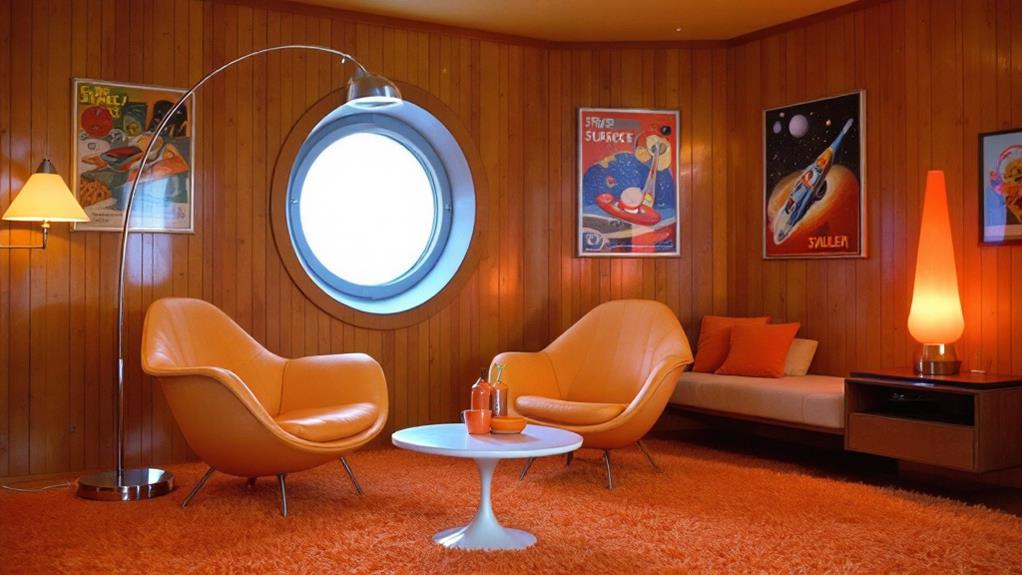
Against the backdrop of the Space Race, 70s interiors rocketed into the future with space-age inspired furniture. You'd find iconic pieces like the Verner Panton S-chair and Eero Aarnio's Ball chair taking center stage in living rooms and home offices alike. These design elements adopted bold, curving forms and innovative materials like molded plastic, fiberglass, and acrylic.
The extraterrestrial aesthetic wasn't limited to seating areas. Sculptural tables, lava lamps, and hanging bubble chairs became popular focal points, defying gravity and conventional design trends. Different styles of space-age furniture blended seamlessly with other 70s favorites, like materials like velvet, creating a unique fusion of futuristic and cozy.
This fascination with space-inspired architecture and interior design reflected the decade's optimism and interest in technology. You could remodel your home into a playful yet sophisticated space station, complete with swiveling bucket seats and sleek, aerodynamic silhouettes. The space-age furniture trend captured the spirit of the era, merging science fiction with everyday living and pushing the boundaries of what was possible in home decor.
Conversation Pits and Sunken Rooms
Stepping down into the heart of 1970s home design, you'd find conversation pits and sunken rooms taking center stage. These innovative interior features were designed to create cozy, intimate spaces within larger, open-concept homes. You'd investigate sunken living rooms with built-in seating, perfect for casual gatherings and enhancing group interactions.
Conversation pits often centered around a fireplace or focal point, encouraging a relaxed, communal atmosphere. The stepped-down design allowed for unique seating arrangements, complementing the era's warm color schemes and earth tones. You'd likely see:
- Rattan furniture, including rattan dining chairs
- Plush, low-profile seating
- Shag carpeting in rich, earthy hues
These sunken spaces weren't just about aesthetics; they served a practical purpose in delineating areas within expansive floor plans. As you scrutinized a 1970s home, you'd notice how conversation pits created a sense of coziness and intimacy, inviting you to sink into comfort and engage in lively discussions. The design trend reflected the decade's emphasis on social interaction and casual living, making it a defining feature of 1970s interior design.
Quirky Accessories and Lighting
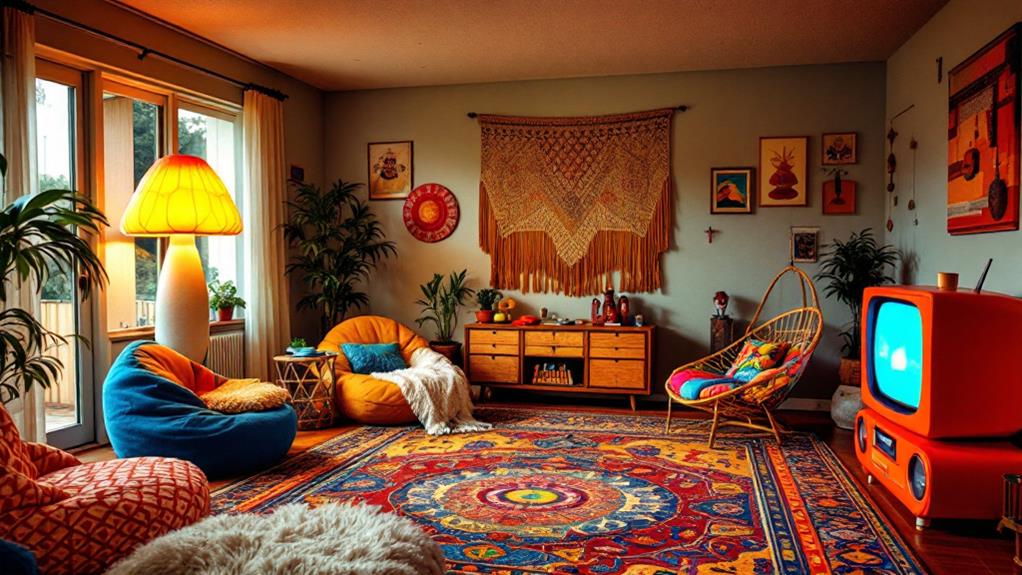
The 1970s home was a playground of quirky accessories and lighting fixtures that pushed the boundaries of conventional design. You'd find lava lamps, shag rugs, and macrame wall hangings adding a playful touch to living spaces. These whimsical elements became staples of 70s home decor, reflecting the era's experimental approach to interior design.
Lighting choices were equally bold, with mushroom lamps and orb pendant lights taking center stage. These retro-inspired fixtures offered a pop of colour and served as eye-catching focal points in rooms. Interior designers investigated vibrant, geometric patterns and psychedelic motifs on textiles, wallpapers, and decorative accessories, creating a visually stimulating environment.
Ceramic figurines, kitschy ceramics, and groovy wall art with humorous themes infused personality into spaces. Unconventional seating options like bean bag chairs and hanging rattan chairs further emphasized the casual vibe. To recreate this look, you can incorporate vintage pieces or reproductions that capture the essence of 70s design. Continue reading to discover how these quirky design choices, often featuring earthy color palettes, transformed homes into eclectic havens of self-expression and creativity.