What Were the Unique Decor Trends of the 80s?
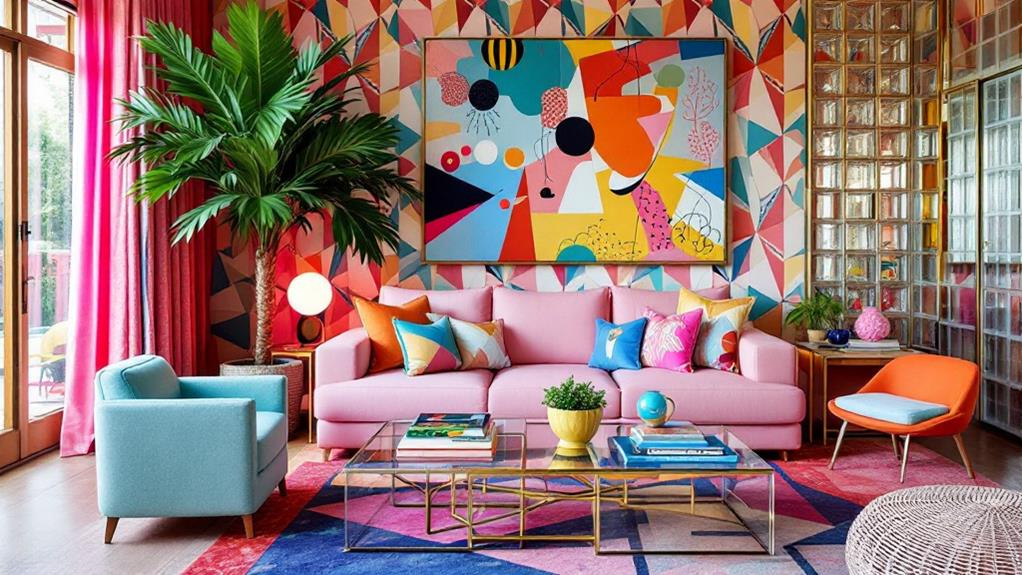
The 80s brought a lively explosion of unique decor trends that redefined interior design. You'd find the Memphis Design Movement's bold colors and unconventional shapes dominating spaces. Neon and pastel color palettes created eye-popping schemes, while mirrored furniture added radiance to rooms. Geometric patterns adorned wallpapers and fabrics, often paired with striking color combinations. Oversized statement pieces, like massive armchairs and exaggerated lighting fixtures, became showstoppers. Lucite and glass elements added a sleek, modern touch to interiors. These trends reflected the decade's energetic and eclectic spirit, leaving a lasting impact on design. Explore how these elements shaped the iconic 80s aesthetic.
Memphis Design Movement
One of the most iconic and influential design movements of the 1980s was the Memphis Design Movement. Originating in Italy, this postmodern style revolutionized interior and product design with its bold colors, graphic patterns, and unconventional approach. You'd find Memphis Design embracing vibrant hues, abstract shapes, and unexpected material combinations that rejected the minimalism of earlier decades. The group was founded in 1981 by Ettore Sottsass, who sought to break away from minimalist and mid-century modern conventions.
As you investigated a Memphis-inspired space, you'd encounter a playful mix of geometrical forms, striking patterns, and a celebration of pop culture aesthetics. The movement's key designers, including Ettore Sottsass, Michael Graves, and Peter Shire, pushed boundaries by creating furniture and objects that were both functional and visually compelling.
Memphis Design's impact on 80s decor was significant, introducing a sense of exuberance and rebellion against traditional design norms. You'd see its influence in everything from furniture to lighting fixtures, with pieces that often featured asymmetrical shapes, clashing colors, and a mix of materials like plastic laminate and terrazzo. This distinctive style has left a lasting mark on design, continuing to inspire contemporary creators and enthusiasts alike.
Neon and Pastel Color Palettes
What Were the Unique Decor Trends of the 80S?
Neon and Pastel Color Palettes
How could anyone forget the eye-popping color schemes of the 1980s? The decade embraced a lively aesthetic that combined neon and pastel color palettes, creating a bold and unforgettable look. You'd find electric blues, shocking pinks, and highlighter yellows dominating interiors, alongside softer shades like baby blue, peach, and mint green. The vibrant color schemes from the 1980s are making a striking comeback in modern decor, with energetic color palettes characterized by neon hues like fluorescent pinks, greens, and blues. Bold colors inject an animated vibe into any space, making rooms feel alive and lively.
What made this era unique was the fearless mixing of these bright colors. You'd often see neon and pastel hues used together in the same space, resulting in a visually striking and animated design style. This combination reflected the decade's energetic and eclectic spirit, extending beyond walls and furniture to lighting fixtures, accessories, and even appliances.
The prevalence of these color palettes contributed to the era's sense of maximalism and excess. It wasn't just about painting a wall; it was about creating an immersive experience that celebrated lively, unapologetic self-expression. Whether you preferred the intensity of neon or the softness of pastels, the 1980s offered a color palette that allowed you to make a statement in your home.
Mirrored Furniture and Accents
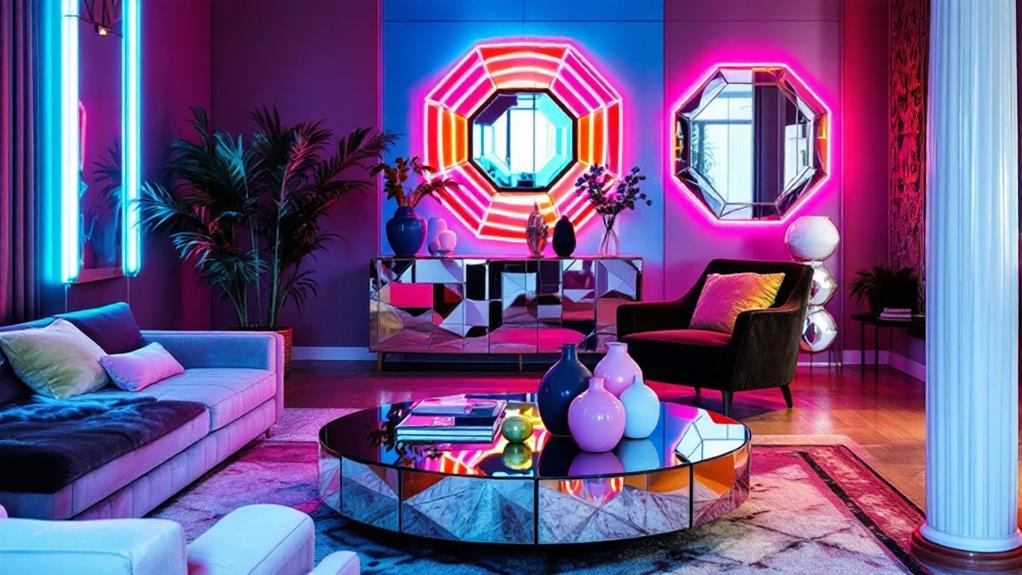
The 80s' love affair with all things shiny and reflective found its ultimate expression in mirrored furniture and accents. If you stepped into a typical 80s home, you'd likely encounter mirrored dressers, end tables, and coffee tables that added a touch of radiance to any room. These pieces weren't just about looks; they served a practical purpose too.
Mirrored furniture and accents were design elements that could rework a space. They created an illusion of depth, making smaller rooms feel more spacious. You'd often find mirrored backsplashes in kitchens or mirrored walls in living areas, bouncing light around and brightening up the entire room.
The reflective nature of these pieces complemented other bold 80s design trends perfectly. They effortlessly integrated with vibrant color schemes and geometric patterns, enhancing the era's maximalist aesthetic. Mirrored accents added a layer of luxury and opulence to interiors, perfectly capturing the decade's penchant for excess and glamour. Whether you loved or hated the look, there's no denying that mirrored furniture and accents were quintessential 80s design elements that left a lasting impression.
Geometric Patterns and Shapes
Geometric patterns and shapes frequently dominated 80s interiors, creating a bold and lively aesthetic that defined the era. You'd find these striking designs everywhere, from wallpapers to furniture and textiles. In your living room, you might've seen geometric patterns adorning sofas, curtains, and even coffee tables, adding depth and vitality to the space.
The 80s embraced the power of geometry to create visually stimulating environments. You'd often encounter:
- Triangles, rectangles, and bold lines in wallpapers and fabrics
- Mirrored surfaces and glass blocks for illusion and depth
- Striking color combinations paired with geometric patterns
- Statement lighting fixtures featuring geometric designs
- Repeating patterns on furniture and accessories
These elements worked together to craft a versatile and eclectic style that was quintessentially 80s. The use of geometric shapes wasn't limited to flat surfaces; three-dimensional forms were also popular in furniture design. Coffee tables with angular legs or asymmetrical shapes were common, while cabinets and shelving units often featured bold, geometric silhouettes. By incorporating these designs, you could reshape your living space into a lively, energetic environment that captured the spirit of the decade.
Oversized Statement Pieces
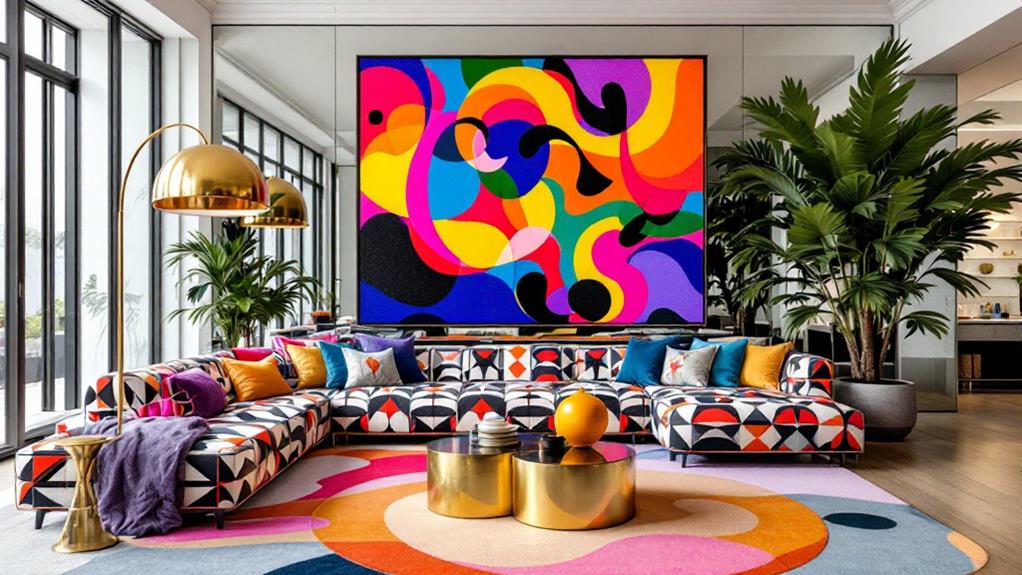
When you stepped into an 80s living room, you'd immediately notice the impact of oversized statement pieces dominating the space. This era of interior design was all about making bold, unapologetic statements, and nothing achieved that better than exaggerated scale.
You'd find yourself dwarfed by massive armchairs and sectional sofas that seemed to swallow the room. Entertainment centers loomed large, commanding attention and serving as focal points. Lighting fixtures weren't just functional; they were showstoppers. Oversized pendant lights and chandeliers hung dramatically from ceilings, while enormous table lamps anchored seating areas.
The walls weren't spared from this trend either. You'd encounter oversized mirrors and artwork that altered spaces into veritable galleries. Decorative objects, too, followed suit, with larger-than-life vases, sculptures, and other accessories scattered throughout.
This penchant for oversized statement pieces wasn't just about filling space. It was a deliberate design choice to create a sense of grandeur and opulence. Walking into an 80s home was like stepping into a time capsule of bold, confident design that wasn't afraid to go big.
Lucite and Glass Elements
Transparency reigned supreme in 80s decor, with lucite and glass elements taking center stage. You'd find these materials incorporated into various pieces of furniture and accessories, creating a sleek and modern aesthetic that defined the era. Lucite, in particular, became a favorite among interior designers and homeowners alike for its versatility and clean lines.
If you were designing a space in the 80s, you might have considered adding lucite elements to:
- Barstools
- Coffee tables
- Accent pieces
- Light fixtures
- Room dividers
The appeal of lucite lay in its ability to create a minimal, unobtrusive look while allowing other design elements to remain the focal point. This characteristic made it a popular choice in real estate staging and home decor. You could effortlessly incorporate lucite pieces to add a visually interesting and modern touch to your space without overwhelming it.
The transparent nature of lucite and glass helped create a sense of openness and airiness in rooms, making them appear larger and more inviting. Additionally, the easy maintenance and clean aesthetic of these materials made them a practical choice for 80s interiors, ensuring their popularity throughout the decade.